Madhya Pradesh is located in central India and is known as the “Heart of India” because of its geographical position. It is famous for ancient temples, UNESCO World Heritage sites, forts, wildlife reserves, rivers, forests and tribal culture. The state has great religious importance with major pilgrimage centres like Mahakaleshwar Jyotirlinga Temple, Omkareshwar Temple and Maihar Sharda Devi Temple. It is famous worldwide for the temples of Khajuraho Group of Monuments, Buddhist heritage of Sanchi Stupa and wildlife tourism in Kanha National Park and Bandhavgarh National Park.Capital: Bhopal.
Major airports: Raja Bhoj Airport, Devi Ahilyabai Holkar Airport, Jabalpur Airport, Maharaja Scindia Airport.
District-wise Tourist Attractions and Religious Places in Madhya Pradesh
Bhopal District’s Attractions:
This capital district of Madhya Pradesh is an important administrative and tourism centre, known for lakes, museums, historic monuments and cultural heritage. (HQ: Bhopal). Key attraction:
- Bhopal City: This historical city distinguished as ‘the City of Lakes’ and `the City of Begums’ is the capital of Madhya Pradesh state. Tourist interest sites in this city and in its surroundings are:
- Wonderful lakes (Upper Lake and Lower Lake): Located in Bhopal city and built by Raja Bhoj in 11th century.
- Gohar Mahal: This historical palace on the bank of Upper Lake built by Qudsia Begum is an old architectural marvel.
- Birla Mandir: A beautiful temple, also known as Lakshmi Narayan Temple, located on Arera hill in Bhopal city.
- Van Vihar National Park: A modern zoological park along Upper lake in city.
- Indira Gandhi Rashtriya Manav Sangrahalaya: A 200-acre anthropological museum on Shyamla hill in Bhopal and overlooking Upper Lake.
- Tribal Museum: Located on Shyamla hill in Bhopal offering the lifestyle, art and history of Gonda, Bhil and Baiga tribes.
- Taj-ul-Masajid: A massive mosque known as ‘Crown of Mosques’ landmark of Bhopal city.
- Kerwa Dam: Located at about 17 kms from Bhopal city in Mendora village is a picnic destination.
- Jagdishpur: Formerly known as Islamnagar, is a historical village at about 12 Kms from Bhopal city, its key attractions are Chaman Mahal, Rani Mahal,Gond Mahal and fort walls & gateways.
Raisen District’s Attractions:
An important historical district with Buddhist heritage and forts. (HQ: Raisen) Tourist, Historical and Pilgrimage Sites in this district:
- Sanchi Stupa: It is an UNESCO World Heritage Buddhist monument associated with Ashoka and Buddhist history located in Sanchi town at 10 Kms from Vidisha city, 23 kms from raisen city and 46 Kms from Bhopal. This is an important Buddhist pilgrimage site.
- Raisen Fort: A historic hill fort in Raisen city.
- Bhimbetka Rock Shelters: Ancient archaeological and UNESCO World Heritage site of prehistoric cave paintings at 10 kms from Obedullaganj town and 45 kms from Bhopal.
- Bhojpur Temple: Also known as Bhojeshwar temple is an ancient Shiva temple famous for its massive single stone Shiva Lingam.
Vidisha District’s Attractions:
An ancient historical district near Bhopal with Buddhist and Hindu heritage.(HQ: Vidisha)Tourist and Historical Sites:
- Udayagiri Caves: Ancient rock-cut caves of Gupta era (Vikramaditya) at about 6 Kms from Vidisha city. About 20 caves and main attraction is huge Varaha (Lord Vishnu) sculpture.
- Heliodorus Pillar: Ancient historical pillar known as Khamba Baba at about 4-5 kms from Vidisha city, built by an Indo-Greek ambassador in 2nd century. Inscriptions on it are in Brahmi script and Prakrit language.
Sehore District’s Attractions:
A district near Bhopal known for temples and natural surroundings. (HQ: Sehore) Key attractions:
- Kubereshwar Dham: Popular Shiva pilgrimage site located in Chitodiya hema village near Sehore city.
- Bijasan Mata Temple: A sacred temple dedicated to Goddess Durga in Salkanpur village on hilltop at 35 kms from Sehore city, also known as Vindhyavasini Beejasan Devi Temple and considered a sacred Siddhpeeth.
Rajgarh District’s Attractions:
A Malwa district known for temples, forts and rural landscapes. (HQ: Rajgarh) Key attractions:
- Narsinghgarh Fort: A Historic hilltop fort and lake in Narsinghgarh town, nearby attractions are Narsinghgarh lake, Jal Mandir, Chhota Mahadev, Baba Mahadev and scenic forest areas.
- Biaora Temples: Temples dedicated to Lord Shiva, Lord Rama, Lord Hanuman and other Hindu deities in Biaora town at about 35 Kms from Rajgarh city.
Indore District’s Attractions:
Indore district is the commercial capital of Madhya Pradesh. Indore city, district headquarter, was the capital of ancient Holkar rulers and is famous for its cotton handloom industry, palaces & historical buildings, temples, street food, night markets, Sarafa Bazar etc. Key attractions:
- Rajwada Palace: This seven-story historical palace built by the Holkar dynasty and located in the Indore city is important heritage and tourism attraction.
- Lal Baag Palace: This palace built in European style architecture was the royal residence of Holkar rulers in Indore city.
- Annapurna Temple: A famous temple dedicated to Goddess Annapurna located in Indore city.
- Markets: Street food, Night markets & Sarafa Bazar.
- Patalpani Falls: A stunning 300 feet cascade at 35 kms from Indore near Mhow on Choral River.
- Choral Dam: A scenic reservoir surrounded by lush green hills at about 40 kms from Indore in Mhow, built around backwaters of Naramda River.
- Lotus Lake: Located in Gurda Khedi village at 25 kms from Indore is a perfect destination for nature lovers. Tourist can enjoy an amazing scene of lotus flowers tranquil boat rides, bird watching and surrounding scenic beauty.
- Ralamandal Wildlife Sanctuary: Located along Indore bypass road at about 12 kms from Indore city known for hiking, birdwatching and spotting wildlife like deer, hare etc.
Khargone District’s Attractions:
Known for Narmada valley, temples and historical monuments. (HQ: Khargone) Key attractions:
- Maheshwar city’s Attractions: Maheshwar city located on the banks of river Narmada is scenic heritage town famous for its unique cotton and silk mix handloom saris, forts and sacred ghats. Key attractions:
- Maheshwar Fort: A historic fort complex of Holkar dynasty housing life size metal statue of Rani Ahilybai and Ahilya Fort, now heritage hotel.
- Narmada Ghats: Beautiful ghats famous for sunset boat rides and evening Narmada Arti.
- Historical Temples: Maheshwar town has more that 100 temples known for its architecture. Some must visit are Ahilyeshwar Temple, Rajarajeshwara Temple and Baneshwara Temple on a small Island in Naramada River.
Dhar District’s Attractions:
A historic district of Malwa with forts, ancient caves and monuments. (HQ: Dhar) Key attractions:
- Mandu town: Medieval city famous for palaces and architecture at 35 Kms from Dhar city. Key attractions:
- Jahaz Mahal: A stunning 700-year-old palace resembling floating ships build between two artificial lakes.
- Rani Rupmati’s Pavillon: A hilltop scenic retreat offering panoramic views of Narmada River valley.
- Other Attractions: Hindola Mahal, Jami Masjid and Hoshang Shah’s Tomb.
- Dhar City: Key attractions in district headquarter city are Dhar Fort (Historic fort & Museum), Bhojshala (Ancient complex), Lat Masjid.
- Bagh Caves: Ancient Buddhist caves in Bagh town at 90 kms from Dhar.
- Mohan Kheda Jain Tirth: A reverted Jain pilgrimage center near Rajgarh known for its ambiance and architecture.
- Bhopawar Jain Tirth: Ancient Jain temple known for its miraculous idols at 6 kms from Sardarpur.
- Ashmadha Fossil Museum & Dinosaur National Fossil Park: This park located near Mandu & Bagh showcases excavated dinosaur eggs, fossils and prehistoric remains.
- Other Attractions: Kakra Khoh Waterfall, Jal Mahal Sadalpur, Koteshwara (Nisarpur).
Jhabua District’s Attractions:
Jhabua is tribal dominated district known for its vibrant Bhagoriya festival and natural beauty. (HQ: Jhabua city) Key attractions:
- Jhabua city: Key attractions in this city:
- Rajwada Palace: Historic palace built by tribal kings.
- Hanuman Tekri Temple: Hilltop temple offering panoramic views of city.
- Rangpura Village: This village located just side of city is famous for cluster of temples, including Jain Temple & Rampanchayat Mandir.
- Devjhiri: A historical and religious site at 8 kms from jhabua city.
- Kathiwada Palace: A historical Raaj Mahal in Kathiwada town.
- Bhandakhaper Waterfall: A scenic site near mannakuwa.
- Ratanmahal Sloth Bear Sanctuary.
Burhanpur District’s Attractions:
A historic Mughal-era city on the Tapti River, famous for forts, tombs and architectural heritage. (HQ: Burhanpur) Key attractions:
- Asirgarh Fort: Historic hill fort called the “Key to Deccan” at 20 kms from Burhanpur.
- Dargah-e-Hakimi: Important religious site.
- Shahi Qila & Shahi Hamam: Mughal palace complex.
- Other Attractions: Kundi Bhandara (400-year-old underground water supply system) Shah Nawaz Khan ka Makbara (Black Taj Mahal), Jama masjid. Moti Mahal.
Alirajpur District’s Attractions:
A tribal-dominated district known for Bhil culture, forests and traditional festivals. (HQ: Alirajpur) Key attractions:
- Rajwada Palace: A historic palace located in Alirajpur city.
- Malwai Mata Temple & Bhil tribal villages: A hilltop temple of Bhil community and villages of cultural tourism near Alirajpur city.
- Other Attractions: Yeshwant Lake, Aadharkaanch Village, Jain Tirth Laxmani, Sondwa forests.
Barwani District’s Attractions:
Located on the banks of Narmada River, known for tribal culture and scenic landscapes. (HQ: Barwani) Key attractions:
- Bawangaja (Chool Giri): Jain pilgrimage site with huge statue at 6 kms from Barwani city.
- Other Attractions: Narmada river ghats, Bhilat Dev Temple (65 kms from Barwani city), Badi Bijasan Mata Mandir, Jalyapani Waterfall, Jvh Waterfall & Umarbeda waterfall.
Khandwa District’s Attractions:
A Nimar region district famous for river islands, temples and cultural heritage. (HQ: Khandwa) Tourist and Pilgrimage Sites in this district:
- Omkareshwar city’s Attractions: Omkareshwar is a sacred island town shaped like holy “Om” symbol on the Narmda River, Major Sites:
- Omkareshwar Jyotirlinga Temple: This ancient temple is one of the 12 Jyotirlingas of Lord Shiva and focus site of this island town. (for more detail see “The twelve (12) Jyotirlingas in India).
- Mamleshwar Temple: Ancient shrine considered equal to Jyotirlinga.
- Other Attractions: Siddhnath Temple, Gauri Somnath Temple, Kedareshwar Temple, Omkareshwar parikrama, Evening Aarti, Narmada River boat ride, Holy Ghats (Nagar Ghat, Abhay or Ahilya Ghat), Satatue of Oneness, Govinda Bhagavatpada cave.
- Sailani Island: Water tourism destination near Omkareshwar.
- Hanuwantiya Tapu: Water sports and tourism hub, located on backwaters of Indira Sagar Dam near Khandwa city.
Ujjain District’s Attractions:
This district is headquartered in Ujjan city, located on the banks of Shipra River, is a most popular pilgrimage destination and venue of Simhastha Kumbh Mela. This city is visited by millions of pilgrims. Top attractions in and around Ujjain:
- Mahakaleshwar Jyotirlinga Temple: This ancient temple is one of the 12 Jyotirlingas of Lord Shiva and focus site of this island town. (for more detail see “The twelve (12) Jyotirlingas in India).
- Mahakal Lok Corridor: A massive and beautiful corridor adjacent to Mahakal temple providing modern facilities to pilgrims. This corridor, surrounded by old Rudrasagar Lake, featuring 108 pillars, statues and murals depicting stories of Lord Shiva.
- Kal Bhairav Temple: This temple dedicated to the chief of Ashta Bhairavas (attendants of Lord Shiva) located just near Ujjain by crossing Shipra River, close to Bhagirathi caves. The deity of this unique temple is famously offered liquor by some visitors as per their faith.
- Bade Ganesh ji ka Mandir: This temple located near Mahakal Temple houses a 20-foot-tall idol of Lord Ganesha and five faced iodol of Lord Hanuman.
- Harsiddhi Temple: This temple dedicated to Goddess Annapurna seated between idols of Mahalaxmi and Mahasaraswati is located near Mahakaleshwar temple in Ujjan city. This temple complex houses two deepstambhas of 1008 lamps each.
- Ram Ghat: Ancient bathing ghat on Shipra River where pilgrims take holy bath and evening Arti ritual is organised as spiritual event.
- Maharishi Sandipani Ashram: An ancient scenic Gurukal, believed that Lord Krishana, Balarama and Sudama studied here.
- Mangalanath Temple: According to Matsya Puran this site, located on a cosmic intersection, is considered as birthplace of Mangal (Mars).
- Ved Shala or Jantar Mantar: An ancient astronomical observatory constructed in 1725 by Maharaja Jai Singh II.
- ISKCON Temple: A beautiful temple dedicated to Lord Krishana.
- Chintamani Ganpati Temple: This temple located at 7 Kms from Ujjain city dedicated to lord Ganesh is a highly reverted shrine, primary iodol is believed to be Swayambhu (naturally self-manifested).
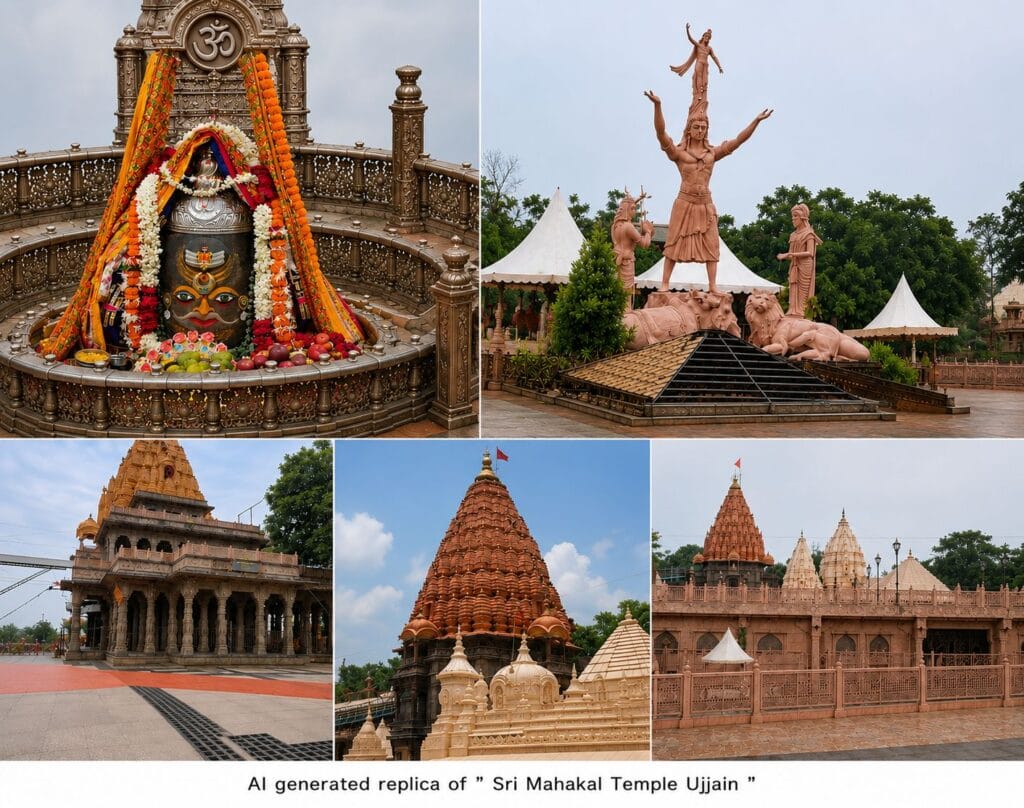
AI Generated image of Sri Mahakal Temple Complex
Agar Malwa District’s Attractions:
This district is part of the Malwa cultural region and famous for agriculture, temples and historical connections. (HQ: Agar) Top attractions:
- Baijnath Temple: Ancient and only Shiva temple renovated by British women in India during colonial rule, located on the banks of Banganga River on Ujjan Kota Road, is renowned for its mystical legends, ancient heritage and everlasting Shiva worship, locally called “Baijnath Dham”.
- Nalkheda Baglamukhi Temple: A highly reverted ancient Shakti Peeth temple dedicated to Goddess Bagalamukhi, one of the ten Mahavidya, located in Nalkheda town on the bank of Lakhundar River, a tributary of the Narmada River. This temple is visited by large number of devotees from across the country.
- Other Attractions: Agar Fort, Motisagar Pond, Kewada Swami Bhairavnath, Manshapurn Ganapati Chipiya Goshari.
Neemuch District’s Attractions:
Known for historical sites, temples and its location near Rajasthan border. (HQ: Neemuch) Key attractions:
- The Neemuch Herbal Mandi: This Mandi, being is a boon for farmers who cultivate medicinal crops, being only trading yard in the country where every part of a plant like thorns, flowers, leaves, peels, seeds, bark and roots are sold fetching handsome remuneration to farmers.
- Bhadwa Mata Temple: A famous pilgrimage temple at 20 kms from Neemuch city.
- Gandhi Sagar Dam and sanctuary: A massive dam at about 100 kms from Neemuch on the Chamba River known for natural beauty and surrounding wildlife sanctuary.
- Other Attractions: Sukhanand Dam, Nava Toran Temple, Morwan dam, Shri Kileshwar Mahadev Temple.
Gwalior District’s Attractions:
This district is headquartered in Gwalior city, which is historic & beautiful city of ancient Sindhia rulers founded by Ranoji Sindhia is a cultural & industrial centre of Madhya Pradesh state in India and is famous for its marvellous palaces, old temples and the medieval fort. This city is the birthplace of the great musician Tansen. Key attractions:
- Gwalior Fort: A historic fort complex described as “the pearl amongst fortresses in India” housing palaces, temples, water tanks etc. located in Gwalior city.
- Jai Vilas Palace: Also known as the Jai Vilas Mahal located in Gwalior city covering about 75 acres, serves as a residence for the descendants of the royal Maratha Scindia family. This palace also serves as a museum housing the Chitrangada Raje Art Gallery and a library. This Palace has an intricately designed Durbar Hall.
- Gujari Mahal Palace: A historic palace built for Queen Mrignayani, now an archaeological museum.
- Saas Bahu Temple: Ancient twin temples dedicated to Aniruddha and Shiva located in Gwalior Fort complex.
- Tomb of Tansen: Memorial of famous musician located in the heart of Gwalior city.
- Other Attractions: Tighra Dam, Gopachal Parvat, Sun Temple, Maharaj Bada.
Datia District’s Attractions:
Datia, district headquarter, is a historic Bundela city famous for palaces and religious sites. Tourist, Historical and Pilgrimage Sites:
- Datia Palace: This seven-storey Bundela palace located in Datia city is a wonderful & beautiful combination of Mughal and Rajput architecture and is also known by several different names as Govind Mahal, Govind Mandir, Jahangir Mahal, Satkhanda Palace, Purana Mahal and Bir Singh Palace.
- Pitambara Peeth: Famous Shakti and spiritual centre in Datia city dedicated to Goddess Baglamukhi (Pitambara Devi).
Jabalpur District’s Attractions:
Jabalpur district is known for majestic Naramda River, historical forts and geological wonders. (HQ: Jabalpur) Tourist, Historical and Pilgrimage Sites in this district:
- Jabalpur City: Jabalpur city called as “city of rocks” is located on rocky hilltop on the bank of Narmada River. This major city of India is known as the cultural capital of Madhya Pradesh. It’s amazing marble mountains and calm waters of river Narmada is prominent attraction for tourists & wanderers. The main attractions are
- Pisanhari Ki Madiya Jain temple: Digambara Jain pilgrimage complex on a hill featuring 152 marble idols and a giant statue of Bahubali in Jabalpur city.
- Rani Durgavati Museum: A museum located in Jabalpur city named after the 16th century warrior queen of Gondwana.
- Kachnar City: Known for 76 feet statue of Lord Shiva surrounded by a scenic garden housing other deities and saints, it is a residential township of Jabalpur city.
- Madan Mahal Fort: Ancient hilltop Gond fort offering panoramic view of Jabalpur city.
- Balancing Rock: An extraordinary geological wonder of eroded volcanic rock formation miraculously remained balanced despite earthquake, located at 7 kms from city.
- Dumna Nature Reserve Park: A large ecotourism park offering walking trails, bird watching, hanging bridges and toy train, located at 8 kms from Jabalpur city.
- Gwarighat & Tilwara Ghat: Sacred bathing ghats on Naramda River, magical evening Arti is a unique experience, located at about 14 kms from Jabalpur city.
- Bhedaghat Town: A scenic town located at 25 kms from Jabalpur on the bank of Naramda River. Key attractions in Bhedaghat:
- Marble Rocks: A magnificent deep gorge cut by Naramda River through volcanic white marble Boating here, specially in moonlight, is a wonderful experience.
- Dhuandhar Falls: Just near Bhedaghat, a dramatic smoke cascade.
- Chausath Yogini Temple: Ancient site featuring 64 intricately carved stone shrines of yoginis. Located at Bhedaghat at 25 kms from Jabalpur city
- Bargi Dam: A massive dam on Narmada River at 33 kms from Jabalpur, a picnic spot known for water sports and birdwatching in evening.
Chhatarpur District’s Attractions:
Chhatarpur district is famous for world heritage monuments, temples and Bundelkhand history. (HQ: Chhatarpur) Tourist, Historical and Pilgrimage Sites in this district:
- Khajuraho Town: Khajuraho is a small town where Hindu and Jain temples built between 950 to 1050 AD are the Architectural Masterpiece of this UNESCO World Heritage site. Khajuraho temple complex has three group of temples:
- Temples in Western Group: This group of temples is main archaeological site, main temples in this group:
- Kandariya Mahadev Temple: This temple dedicated to Lord Shiva is largest and tallest.
- Lakshmana temple: This temple dedicated to Vaikuntha-Vishnu featuring more than 600 images of deities is best preserved shrine.
- Chausath Yogini Temple: This is oldest surviving temple in this complex, built entirely by granite.
- Matangeshwar Temple: This temple dedicated to Lord Shiva is active place of worship.
- Chitragupta Temple: This temple of impressive ceiling is dedicated to Sun God and featuring a 11 headed Lord Vishnu image.
- Vishwanath Temple: Temple of grand entrance dedicated to Lord Shiva and Nandi shrine.
- Lakshmi Temple: Now houses an image of Goddess Brahmini
- Devi Jagdamba Temple: Housing an image of Goddess Kali, originally dedicated to Lord Shiva.
- Varaha: A small temple dedicated to Lord Vishnu.
- Temples in Eastern Group:
- Parsvanatha Temple: This is the largest Jain temple in Khajuraho.
- Adinatha Temple: This temple is dedicated to Jain Tirthankara Adinatha.
- Ghantai: Known for its pillars displaying the 16 dreams of Mahavira’s mother.
- Shantinath Temple: Dedicated to Jain Tirthankara Shaninatha.
- Vaman & Javari Temples: Hindu temples known for their carved doorways.
- Jain Museum: Established in 1987, it is a circular gallery featuring collections of sculptures and artifacts from Jain temples.
- Temples in Southern Group:
- Chaturbhuj Temple: This temple, also known as Jatakari temple, houses a colossal statute of Lord Vishnu.
- Dulhadev Temple: This temple, located at 1 kms away from main group, is dedicated to Lord Shiva and known for its carvings of heavily ornamented ‘flying apsaras’.
- State Museum of Tribal and Folk Art: This museum, located in Chandela Cultural Complex, shows terracotta sculptures, regional masks and bamboo artifacts.
- Archaeological Museum: This museum, located near Western Group of Temples, features over 2000 ancient sculptures and relics.
- Khajuraho Dance Festival: A week-long premier dance festival is organized every year at the Khajuraho Group of Monuments. It features Kathak, Bharatanatyam and Odissi like dance events against the illuminated ancient stone temples.
- Beni Sagar Dam: This dam built on Khudar river at about 5 kms from Khajuraho town is a popular picnic spot.
- Raneh Falls: This spectacular high waterfall on ken River is located at about 20 kms from Khajuraho town.
- Dhubela Museum: This museum also known as ‘Maharaja Chhatrasal Museum’ is located on Chhatarpur-Nowgaon road at 62 kms from Khajuraho on the bank of Dubela Lake. This museum spread in 300-acre houses 8 galleries showcasing Bundela dynasty artifacts.
Singrauli District’s Attractions:
Known as the energy capital of India due to coal mines and power projects; also has natural landscapes.(HQ: Waidhan) Key attractions:
- Orchha city’s Attractions: Orchha means ‘Hidden Place’ is a must visit destination which gives a charming experience to a vacation tour. Orchha highlights the unique glory and majesty of the Bundelas. Top attractions:
- Orchha Fort: Historic fort of Mughal and Rajput architecture, where light and sound show is organized in evening.
- Jahangir Mahal: Historic palace built by Raja Bir Sing Deo to host Mughal Emperor Jahangir, known for its architecture and panoramic view of city.
- Ram Raja Temple: A palace converted temple, only temple in India where Lord Ram is worshiped as a reigning King instead of a deity and guard of honor is presented daily.
- Kanchana Ghat: Located at about 12 kms, having 14 magnificent tombs of former rulers of Orchha on the bank of Betwa River.
- Chaturbhuj Temple: Located near Ram raja Temple and known for its architecture and interior.
- Orchha Nature Reserve: A wildlife sanctuary having water activities like river rafting, boating, cycling and birdwatching.
- Other Attractions: Laxminarayan Temple, Sunder Mahal, Dauji ki Haveli,
- Rihand Dam: Reservoir and scenic area near Waidhan city.
- Mada Caves: Ancient rock-cut caves and painted rock shelters at 32 kms from Waidhan city.
Narmadapuram (Hoshangabad) District’s Attractions:
A scenic district situated on the banks of Narmada River, known for forests and pilgrimage places. (HQ: Narmadapuram) Key attractions:
- Pachmarhi Town: The Pachmarhi is a hill station at an altitude of about 1060 meters known as “Satpura ki Rani”. The name Pachmarhi is believed to be due to the five (means Panch in Hindi language) caves (Pandav Caves and as per myth these caves were built by the five Pandava brothers of Mahabharatha era during their exile. Key attractions:
- Bee Falls: Most popular waterfall at 3 kms.
- Pandav Caves: Ancient caves believes that Pandavs lived here during their exile.
- Jatashankar Caves: A sacred cave temple dedicated to Lord Shiva.
- Chauragarh Temple: A sacred temple dedicated to Lord Shiva on a height crest.
- Handi Khoh: A deep valley viewpoint.
- Bison Lodge Museum: Centre for the flora, fauna and history of Satpura National Park.
- Gupt Mahadev & Bade Mahadev: Narrow cave twin temples in Mahadeo hill.
- Rajat Pratap Falls: Also known as Silver fall or Big fall, can be reach by trek.
- Dhoopgarh: This point is height peak offering panoramic views of Satpura range and sunset.
- Satpura National Park & Tiger reserve: A massive park divided in zones like Madhai and Churna, having safari facilities.
- Sethani Ghat: One of largest ghat in India on the bank of Narmada River ghat in Narmadapuram city. Known for evening arti and Narmada Jayanti celebrations.
- Adamgarh Hills: Ancient hills featuring prehistoric rock paintings and carved caves at just 2 kms from Narmadapuram city.
- Blogs (Click on it to see other blogs)
Leave a Reply