Tag: Somnath Temple

  • Top Tourist Attractions and Pilgrimage Places in Gujarat

    Gujarat a culturally rich state of India has many Tourist destinations and pilgrimage centres along with heritage sites, wildlife, and coastal beauty. The sacred Somnath Temple Somnath Temple (one of 12 Jyotirlingas), Dwarkadhish Temple, iconic Statue of Unity are big attractions for tourists and every district offers something unique.

    District-wise Tourist Attractions/Destinations and Pilgrimage Places in Gujarat are:

    Ahmedabad:

    Ahmedabad, a major industrial centre, is famous for textile heritage, Sabarmati Ashram and combination of historic architecture with modern development. Key attractions in Ahmedabad are:

    • Sabarmati Ashram: Gandhi’s residence on the bank of Sabarmati River which remained centre of India’s freedom struggle.
    • Adalaj Stepwell:  Also called Rudabai Stepwell, located in a nearby small town, is Intricately carved historic stepwell. It is a popular tourist attraction.
    • Kankaria Lake: This large lake in Ahmedabad city is a popular family recreation spot.

    Gandhinagar:

    Gandhinagar, capital of Gujrat located near Ahmedabad, is a planned green city having modern infrastructure. Key attractions in Gandhinagar are:

    • Akshardham Temple: Hindu spiritual complex with showcases and gardens.
    • Indroda Nature Park: Also known as Jurassic Park of India with fossil exhibits is in a nature park in large area with dinosaur and small zoo.

    Narmada:

    This district having its headquarters at Rajpipla town, City of Royals, is tribal area along Narmada River. Key attractions in Narmada are:

    • Statue of Unity: World’s tallest statue of Sardar Patel (Known as Iron man) on bank of Narmada River facing Sardar Saroval. This is a most attractive tourist destination.
    • Sardar Sarovar Dam: This big dam on Naramda River near Kevadia with scenic viewpoints is a major tourist spot in Gujrat.

    Devbhoomi Dwarka:

     Devbhoomi Dwrka city, a sacred pilgrimage centre in Saurashtra, located on the southern coast of the Gulf of Kutch is headquarter of district. Key tourist and pilgrimage attraction in Devbhoomi Dawarka are:

    • Dwarkadhish Temple: A five-story stunning architecture and 2500 years old most famous temple dedicated to Lord Krishna is one of sacred Char Dham sites.
    • Dwarka Beaches:
    • Shivrajpur Beach: Famous for water sports and clear water at 12 Kms.
    • Dwarka Beach: A spiritual coastal spot near town.
    • Beyt Dwarka Beach: A spot visited during trips to Beyt Dwarka temple, an island believed to be the original residence of Lord Krishana.

    Gir Somnath:

    Gir Somnath is a costal district having ita headquarter in Veraval city. This district is famous tourist and pilgrimage attraction due to famous Somnath Temple (one of the 12 Jyotirlingas) and having parts of Gir National Park and beaches around Veraval. Key tourist and pilgrimage destinations in Gir Somnath are:

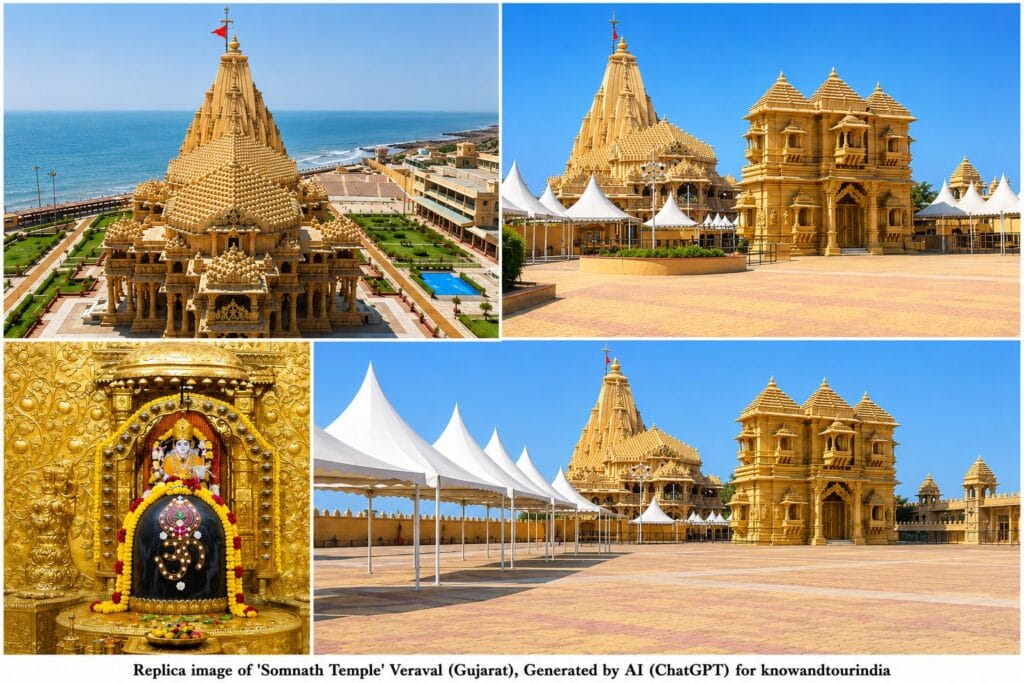
    • Somnath Temple: Located in Prabhas Patan near Veraval. Its architecture and spiritual significance being one of the 12 Jyotirlingas makes it must visit site for tourists as well as for pilgrimage. See blog on 12 Jyotirlingas’ for more details.
    • Bhalka Tirth: A beautiful temple dedicated to Lord Krishna’s last moments in Somnath city.
    • Beaches:
    • Somnath Beach: Located near Somnath Temple, relaxing point after visiting temple.
    • Triveni Sangam Beach: Located near the confluence of the Kapila, Saraswati and Hiran rivers offers a calm atmosphere.
    • Veraval Beach: Offering glimpse of coastal life being near fishing port.
    • Simbor Beach: A scenic spot near Una.

    Junagadh:

    This district is located at the foothills of ancient sacred mountains of Girnar and having headquarter in Junagarh city. Junagadh is famous for ancient Buddhist caves, Jain temples and historical monuments in Saurashtra. Key tourist and pilgrimage attractions are:

    • Girnar Hills: Sacred trekking and pilgrimage destinations in these hills are:
    • Girnar Parikrama: Week-long annual journey by large numbers of devotees.
    • Jain Temples of Neminath: Complex of many jain temples including Tirthankar Neminath and Mallinath Temple.
    • Bhavnath Temple: Dedicated Lord Shiva Mahadev at foot of Girnar hill, annual fare is organised here on Shivratri, known for spiritual favour.
    • Amba Mata Temple: An extremely visited temple on a peak near tope of ropeway.
    • Girnar Rope way: Asia’s longest rope way offering panoramic view in way to Amba Mata Temple.
    • Dattatreya Temple: Dedicated to three face Lord Vishnu and located on highest and challenging peak.
    • Gorakhnath Mandir: Located on a high peak.
    • Kalika Temple: Dedicated to Goddess Kali on a vertical peak.
    • Jatashankar Mahadev Temple: Peaceful templeof Lord Shiva located in valley.
    • Hanuman Dhara: A beautiful watercourse and Lord Hanuman ji temple.
    • Ashoka Edicts: These ancient inscriptions must visit site in way to hills.
    • Uparkot Fort: Ancient fort with caves build in 319 BC by Chandragupt a Mauryan emperor.
    • Gir National Park : Only sole natural habitat of Asiatic lions, also spread in Amreli and Gir Somnath districts. Facilities of Jungle Safari, Gypsy Safari, Bus Safari,  Nature Safari etc available by online booking.

    Porbandar:

    Porbandar city, the birthplace of Mahatma Gandhi, is headquarter of this coastal Saurashtra district. Tourist attractions and pilgrimage site in Porbandar are:      

    • Harshiddhi Mata Mandir: An ancient temple in Miyani on a hill near scenic beach at 30 Kms from Porbander is a significant pilgrimage site.
    •  Kirti Mandir: Ancestral home and birthplace of Mahatma Gandhi.
    • Porbandar Beach & Chowpatty: Much liked picnic spot of scenic coastal view.
    • Huzoor Place: A picturesque palace built by last ruler.
    • Jambavan Cave: Ancient cave linked to Ramayana.
    • Sudama Temple: Dedicated to Sudama, A childhood friend of Lord Krishana.

    Banaskantha:

    This district with Palanpur city as its headquarters is an agricultural area. Key attraction of Banaskantha is:

    • Ambaji Temple: Ancient temple dedicated to Maa Amba, one of the 51 Shakti Peethas, believed that heart of Goddess Sati was fallen here. Hence it is much visited famous pilgrimage place.

    Bhavnagar:

    Bhavnagar, important coastal city known for its shipbreaking and diamond processing, is headquarter of this district. Key attractions in Bhavnagar are:

    • Palitana Temples: Largest Jain Temples Complex dedicated to Lord Adinath on Shatrunjaya Hill is a major Jain pilgrimage site with more than 800 temples.
    • Gopnath Mahadev Temple: This 700 years old temple is dedicated to lord Shiva and know for its connection to a sant Narsinh Mehta. It is located at scenic site of rocky beaches at about 75 Kms from Bhavnagar.
    • Velavadar National Park: Famous for massive population of blackbucks.

    Surat :

    Surat city known as ‘diamond and textile capital of Gujrat’ is district headquarter. Surat, a major commercial port, is a fastest growing city on the Tapi River. Key tourist attractions in Surat are:

    • Dumas Beach: A rural beach at about 21 kms from Surat city, known for black sand and coastal views dotted with palm trees.
    • Ambika Niketan Temple: Popular religious place on the bank of Tapti River dedicated to Maa Ambika.
    • Surat Caste (Old Fort) : Historic site along Tapti River.
    • Science Center: A planetarium, museum and art gallery.
    • Jagdishchandra Bose Aquarium: Under water aquarium.
    • Sarthana Nature Park: A large Zoo.
    • Textile Market (Ring Road): A major textile hub on Ring Road area.
    • VR Mall: A popular shopping and entertainment destination.
    • ISKCON Temple: A beautiful temple on the bank of Tapti River.
    • Sawaminarayan Temple: known for architecture located in Adajan.

    Dang:

    Dang is a lush forested tribal area ideal for eco-tourism and unique biodiversity around Ahwa city (district head quarter). Tourist attractions in Dang district are:

    • Saputara : A popular scenic hill station nested in Sahyadri range of Western Ghat, its attractions are:
      • Saputara lake.
      • Gira Waterfalls.
      • Rope way.
      • Sunset point & Table point.
      • Artist Village.

    Jamnagar:

    Jamnagar city is district headquarter known for oil refineries, coastal attractions, Bandhani textiles, and historic sites. Key tourist attractions in Jamnagar are:

    • Marine National Park: This marine park with coral reefs is a must visit scenic site to know “Marine biodiversity” and “Interconnected ecosystem”.
    • Lakhota Lake: Also called ‘Ranmal Lake’ is a scenic lake with fort and museum in its middle.

    Patan:

    This historic city district is famous for Rani ki Vav stepwell, a UNESCO listed architecture, Patola Saree (time intensive silk saree) and ancient temples. Key tourists’ attractions in Patan are:

    • Rani ki Vav:  A UNESCO listed stepwell masterwork.
    • Patola Saree Museum:  Showing ancient art of double ikat patola weaving.
    • Panchasara Jain Temple: Located in middle of town.

    Vadodara:

    Vadodara (Baroda) city,cultural and educational hub, is famous for its “Laxmi Vilas Palace”. This Place, big tourist attraction, is the largest private residences of a prominent Royal Maratha family in about 500 acre and having key attractions as a lavish Darbar Hall, Museum, golf course and gardens.

    Panchmahal:

    Panchmahal district is known for its hills, rivers, and historic forts around Godhra. This district blends tribal culture with agricultural and mineral resources. Key attractions in Panchmahal district are:

    • Champaner-Pavagadh Archaeological Park: A UNESCO World Heritage site having Historic Forts, Hindu-Jain Temples and Mosques.
    • Pavagadh Hill: It is a sacred pilgrimage site of Kalika Mata Temple of Mahakali Mata on the top of hill.

    Mehsana:

    This district having headquarter in Mehsana city is famous for Sun temple at Modhera village:

    • Sun Temple Modhera: An ancient temple dedicated to Sun God with stunning architecture located in Modhera village.

    Kutch (Kachchh):

    Kutch is a much large district by area having its headquarter at Bhuj city.Kutch is recognized for its vast ‘white Rann salt desert’. Key tourist attractions in Kutch are:

    • Rann of Kutch: Vast salt desert of about 7500 sq kms known for strange landscapes best for photography.
    • Dholavira:  A UNESCO World Heritage site of ancient Indus Valley Civilization.

    Mandvi Beach: Located at historic Mandvi port at 60 Kms from Bhuj is a scenic white sand, clean and peaceful destinatio

    • Blogs ( click on it to see other blogs)
  • 12 Jyotirlingas in India, You must visit once in life:

    According to Hindu mythology Brahma, Vishnu, and Mahesh (Shiva), collectively known as Trimurti or Tridev are the three main Hindu Gods, believed to be self-manifested, who control the universe’s creation, sustenance, and destruction respectively. Hence Brahma is the creator, Vishnu is the administrator and Mahesh is the destroyer as per Hindu mythology. As per a myth Lord Vishnu and Lord Brahma were debating that who is supreme. Lord Shiva (Mahesh) appeared as a column of light and asked them to find it’s both ends. Brahma moved to know the upper end and Vishnu moved to know the lower end of this column of light which later on known as Jyotirlinga. After a long time both appeared in front of Shiva and Vishnu accepted his failure to find the end but Brahma tell lie that he found the end of that light. This angered Lord Shiva because both were unsuccessful and due to which Lord Shiva cursed Brahma that he will not be worshipped by anyone despite he is the creator of the Universe. It is believed that the jyotirlingas are existing at the places where these columns of light fell. As per Shiva Purana there such 64 jyotirlinga shrines in India out of which 12 are the most sacred as believed to be ‘Swayambhu’, means they were created themselves without human involvement, though different myths are also associated with each of these Jyotirlingas. The temples of these Jyotirlingas are considered very auspicious as the supreme powers of Shiva by devotees.

    These Twelve Jyotirlingas are :

    Kedarnath Temple, Uttarakhand:

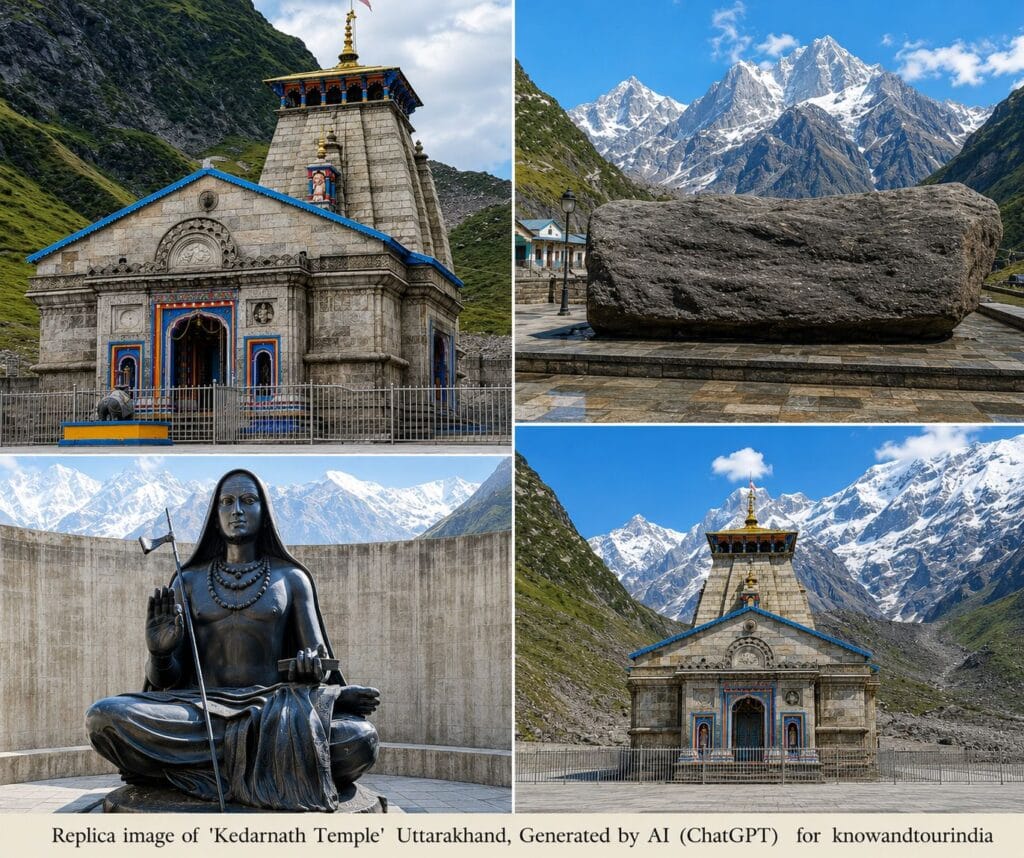
    Kedarnath temple, one of the twelve “Jyotirlingas” of Lord Shiva, located at an altitude of 3,580 meters near Chorabari glacier, the source of the Mandakini river is the most revered temple of Hindus and is a part of Char Dham pilgrimage circuit. This temple located in Rudraprayag district of Uttarakhand, India is about 150 miles from Hardwar. This temple having an aura of peace and purity around is considered to be more than a thousand years old.  It is said that by visiting this temple the unholy become holy and the holy becomes holier.  It is believed that praying at this temple fulfills the all desire of devotees. As per tradition of pilgrimage to Kedarnath devotees first collects holy water from Yamunotri and Gangotri to offer at Kedarnath. When the Kedarnath temple remains closed in winters, the worship of God Kedarnath ji is done at Ukhimath.

    It is a myth that considered that after the great battle of Kurukshetra, the Pandavas felt guilty of having killed their own kith and kin, so they needed the blessing of Lord Shiva for their redemption. But Lord Shiva was not willing and so eluded the Pandavas repeatedly and took refuge at Kedarnath in the form of a Bull and dived into the ground due to followed by Pandavas, leaving his hump on the surface.

     The remaining portions of Lord Shiva reappeared at other four places, the locks with the head at Kalpeshwar, the face at Rudranath, the arms at Tungnath and the stomach(nabhi) at Madmaheshwar, so they are worshipped there as signs of Lord Shiva.

    Vishwanath Temple, Varanasi, Uttar Pradesh :

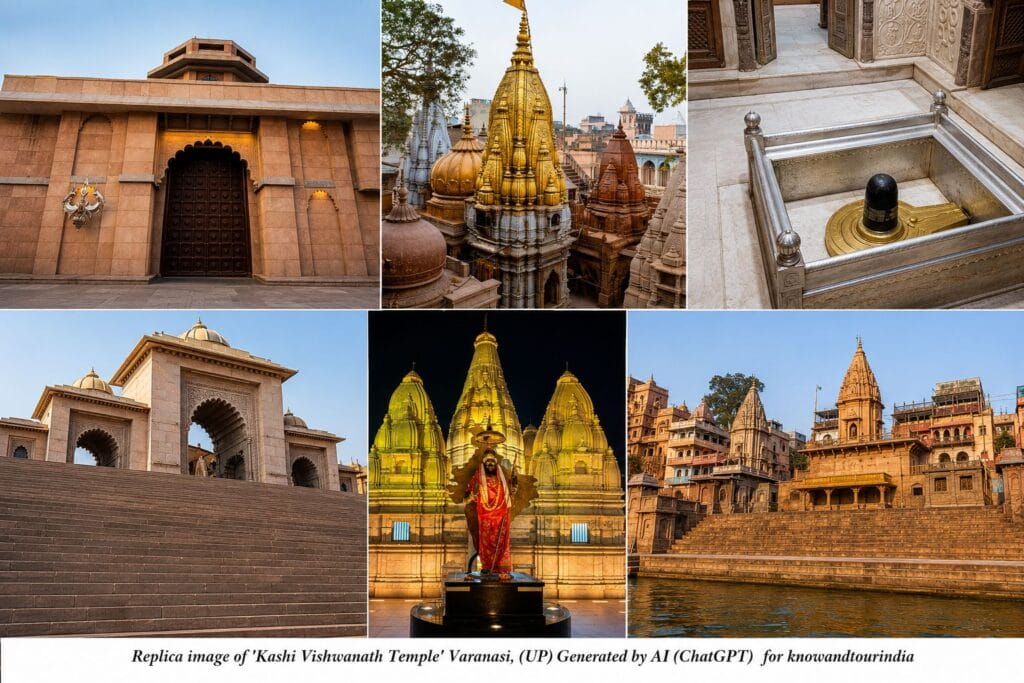
    Vishwanath Temple, one of the twelve “Jyotirlingas” of Lord Shiva, located in the crowded area of holy city Banaras (Varanasi) on the bank of holy river Ganga in Uttar Pardesh state of India. It is believed that this site is where the first Jyotirlinga proved its supremacy over other gods as vishwanath means the ruler of universe. As per Hindu myth the person who dies here achieve liberation and it is believed that Shiva himself resided here. The city Varanasi is also known by other names i.e. Banaras and/or Kashi. As per myth Lord Brahma performed severe penance here due to which Lord Shiva and Goddess Parvati visited him. Lord Brahma sang hymns to praise Lord Shiva but by mistake he mispronounced one of the hymns.  This angered Lord Shiva and he severed Brahma’s head but it (Brahma’s head) was stuck on Shiva’s back which was falloff only when Shiva went to Varanasi.

    Mahakaleswar Temple, Ujjain, Madhya Pradesh:

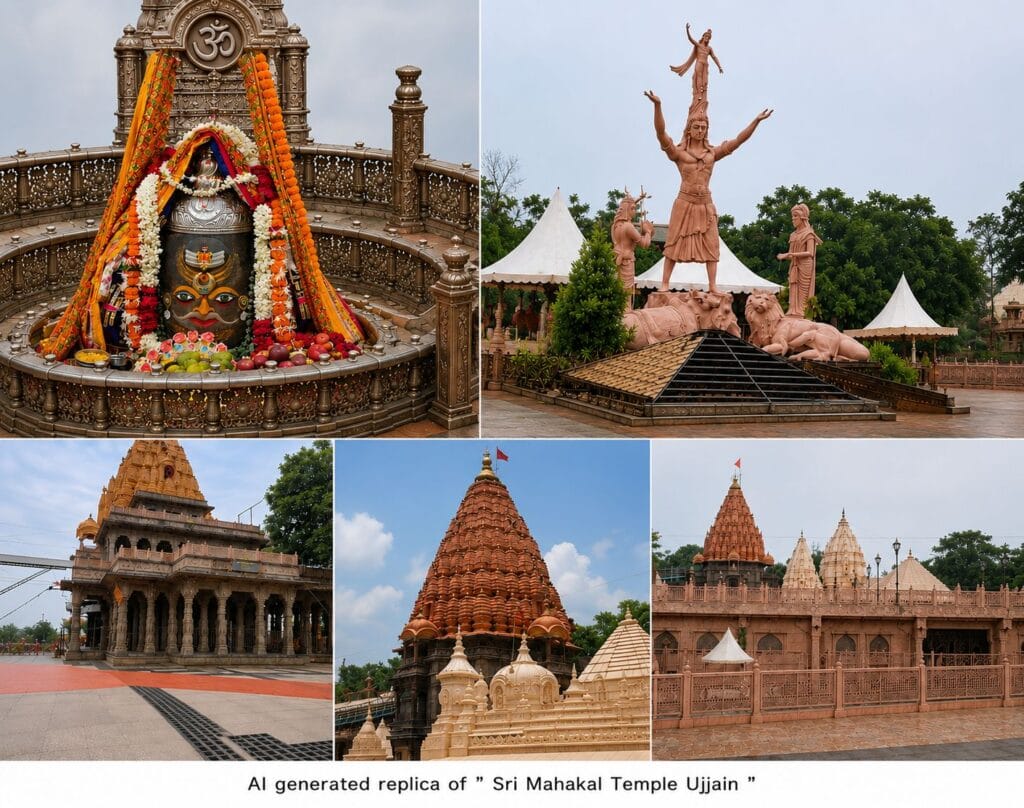
    Mahakaleshwar Temple, one of the twelve “Jyotirlingas” of Lord Shiva, is located in Ujjain city on the banks of the river Kshipra in Madhya Pradesh state of India. This lingam on the banks of Rudra Sagar lake is consider to be Swayambhu and believed that it derives powers from Shakti within. The temple complex houses more than hundred small shrines and remains crowded mostly. This only south facing lingam known as “Mahakala” is one among the seven “Mukti-Sthal”, the place that can liberate a human.

    Following myths are associated with Mahakaleshwar (Mahakala) Temple:

    1.    A Shiva devotee King Chandrasena was the ruler of Ujjain  and due to his devotion Lord Shiva appeared in his Mahakal form to defeat his enemies. Lord Shiva agreed to reside in Ujjain to take care of the city after conquered the enemies of King Chandrasena.

    2.   A rakshasa (demons) named Dushana threatened the four Brahmanas to kill, if they will not their practice of reading Vedas. When these Brahmanas were attacked by the demons they pray to Shiva. Lord Shiva appeared and killed  Dushana and his soldiers, hence Lord Shiva is known as Mahakala.       

    Omkareshwar Temple, Khandwa, Madhya Pradesh:

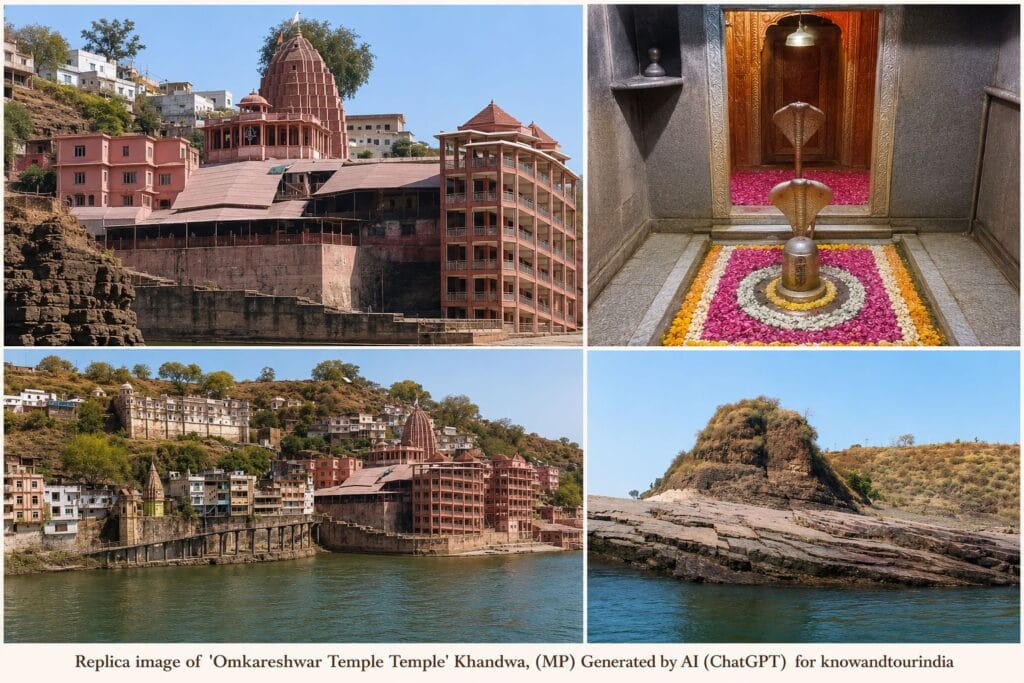
    The Omkareshwar Temple, one of the twelve “Jyotirlingas” of Lord Shiva, is located at Khandwa in Madhya Pradesh on an island called Shivapuri in the Narmada River. The shape of the lingam in this temple is like ‘Om and Omkareshwar means “Lord of Omkara (Sound of Om)”.

    Following myths are associated with Omkareshwar Temple:

    1. As per a Hindu myth, once upon a time, when Devtas(Gods) were defeated by Danavas (Demons) Lord Shiva emerged in the form of Omkareshwar Jyotirlinga and defeated the Danavas (Demons) on the pray of Devtas (Gods) hence this temple is considered as highly sacred by the Hindus.
    2. As per Shiva Purana, when Narada visited the Vindhyas mountains he claimed that Mount Sumeru mountain is superior than the Vindhyas due to Lord Shiva present there always despite Vindhyas is the highest peak. Due to this Vindhyas prayed and Lord Shiva appeared before the Vindhya mountains causing the Omkareshwar temple existence.

    Somnath Temple, Veraval, Gujarat:

    The Somnath Temple, one of the twelve “Jyotirlingas ” and  one of the highly venerated Shiva shrines is located at Veraval in Gujarat state of India. As per myth the moon was married to 27 daughters of Daksha Prajapati representing the 27 Nakhshatras but moon loved his wife Rohini the most out of his 27 wives. Due to this indifference Daksha Prajapati cursed moon that it would lose all its radiance. The disappointed moon visited this place with his wife Rohini and worshipped the Sparsh Lingam to get rid of the curse. Lord Shiva pleased with his devotion blessed him to regain his lost beauty and shine and thereafter on the request of moon Lord Shiva assumed the name Somchandra and resided here eternally, so the place is known as Somnath. This Somnath temple was built around the 9th century CE and was destroyed by Muslim invaders from time to time and Mahmud Ghazni had plundered the temple in the 11th century. So this temple has been rebuilt many times in history and after independence of India this temple was reconstructed by demolishing the ruins on the orders of Vallabhbhai Patel, the first Home Minister of India, but can be completed after his death. The Maru-Gurjara architecture also called Chaulukya or Solanki style of this temple makes it a picturesque pilgrimage spot. This temple is an important Hindu pilgrimage place and must visit tourist site.

    Nageshvara Temple,  Dwarka, Gujarat:

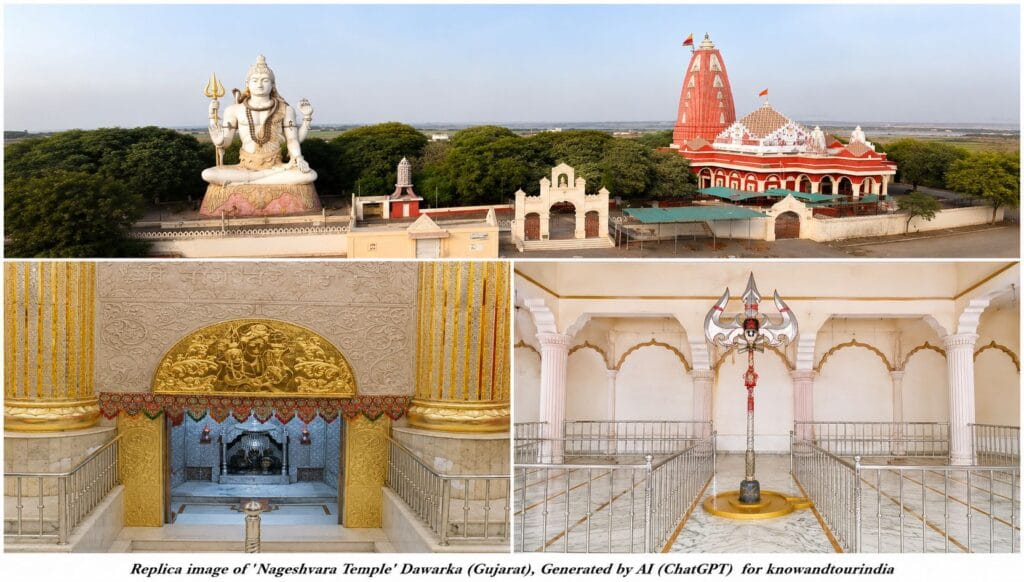
    The Nageshwar Temple,, finds its mention in Shiva Purana as one of the twelve “Jyotirlingas ” of Lord Shiva  is located near Dwarka on the coast of Saurashtra in Gujarat state of India. It is believed that worship at this temple denotes protection from all types of poison and devotees who worship at this temple become free of all poisons.  As per myth this ocean was ruled by the demon Daruka and he (demon Daruka) used to imprison and kill those who traversed through the sea. The said demon also do same with Supriya, a Shiva devotee, who started chanting “Om Namah Shivaya” and Lord Shiva gave him (Supriya) a divine weapon called “Pashupata” to kill the demon and his army. Hence Nageshwar Shivling was established as Nageshwar means king of nags (snakes).

    Rameshwaram Temple, Rameshwaram, Tamil Nadu:

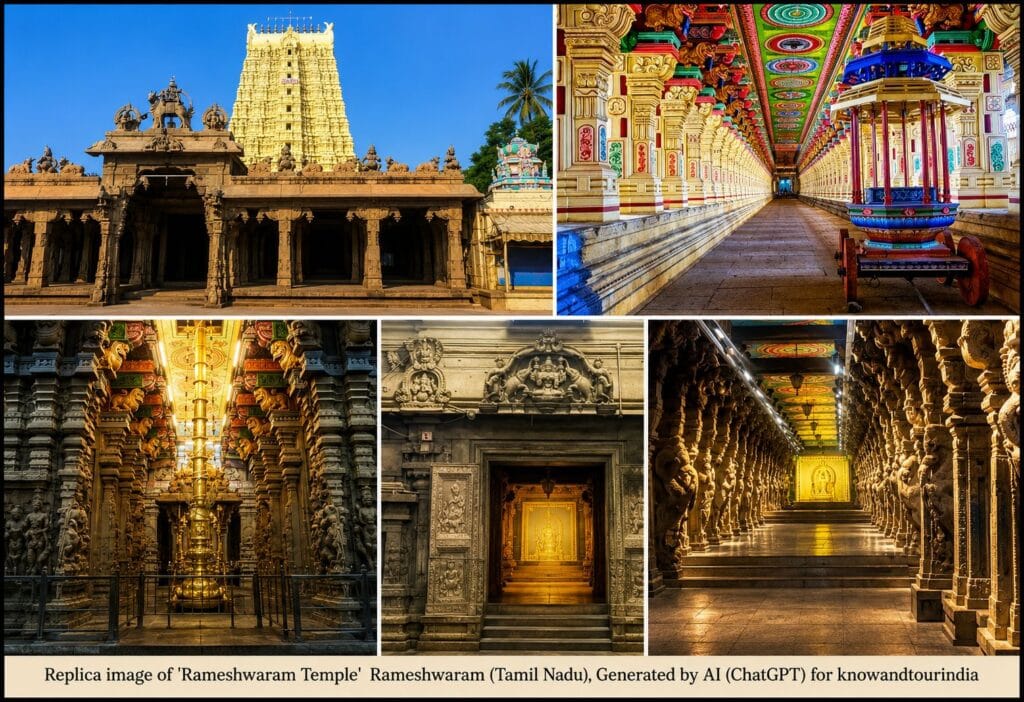
    The Rameshwaram Temple, one of the twelve “Jyotirlingas ” of Lord Shiva  is located  on seashore in the Rameshwaram island of Tamil Nadu state of India near Ram Shetu. This southernmost “Jyotirlingas”  temple is associated with Ramayana and Lord Ram’s victorious return from Sri Lanka. It is believed that when Lord Ram stopped at here on his way to Sri Lanka and was about to drinking water on this seashore a celestial edict was heard by him that ‘you are drinking water without worshipping me’. On hearing it Lord Ram made a Shiv-linga of sand and worshipped it. The Lord Shiva and Goddess Parvati appeared and blessed him to defeat Ravana.  The Lord Shiva on request of Lord Rama resided here as a Jyotirlinga.

    Mallikarjuna Temple, Srisailam, Andhra Pradesh:

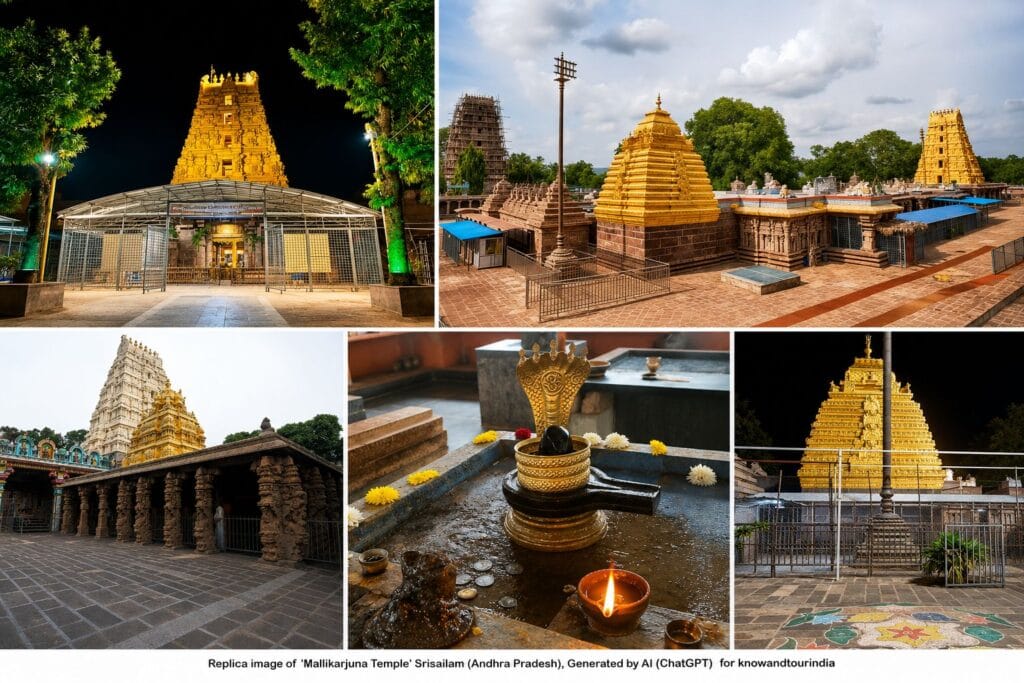
    The Mallikarjuna Temple, one of the twelve “Jyotirlingas ” of Lord Shiva  is located  at the banks of the Krishna River on the Shri Shaila Mountain (Srisailam) in Andhra Pradesh state of India.  This temple, one of the greatest Shaivite shrines in India, is also known as “Kailash of the South” being presiding deities at this temple are Mallikarjuna (Shiva) and Bhramaramba (Devi) and this large fort like temple as known as ‘Sri Bhramaramba Mallikarjuna Temple’.

    As per this myth in Shiva Purana Lord Shiva and Goddess Parvati arranged a competition among their both sons, Kartikeya and Ganesha to decide who should get married first. As per this task who will complete the round the word first will be winner so on hearing it Kartikeya started his journey by sitting on his peacock but  Lord Ganesha went in circles around his parents considering that they are the world for him. It is believed that taking the circumvent of  parents is equivalent to taking the circumvent of  the world. This pleased the Lord Shiva and Godess Parvati  and they  married Ganesha to Siddhi (spiritual powers) aprosperity). As per other myth  Buddhi (the intellect)  is also believed to be the wife of Ganesha.

    The angered Kartikeya, the elder son of Lord Shiva, decided to remain unmarried  and left his home due to decision of marriage of his younger brother Ganesha before him and came to Kraunch Mountain. All Gods of Hindu mythology came here  to console Kartikeya but remain unsuccessful then Shiva-Parvati themselves came but they were also turned away by Kartikeya.  Lord Shiva and Goddess Parvati were very hurt due to this state of Kartikeya and decided to resided on the mountain as Jyotirlinga  by the name of Mallikarujna (Mallika means Parvati&  while Arjuna means Shiva). It is believed that the person on seeing the tip of this mountain gets liberated from all sins and becomes free from the ferocious cycle of life and death. 

    Vaidyanath or Baijnath Temple, Deogarh, Jharkhand:

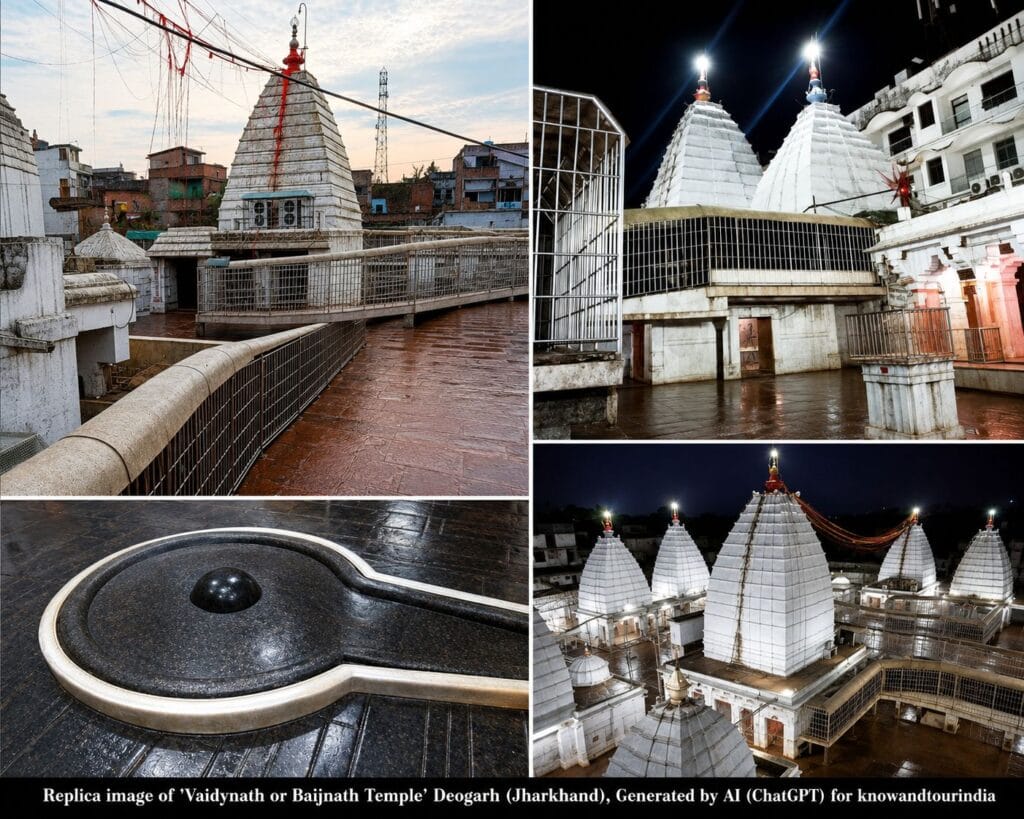
    The Vaidyanath Temple also known as Baijnath or Vaijnath, one of the twelve “Jyotirlingas” of Lord Shiva is located at Deogarh in the Santal Parganas region of Jharkhand state of India. It is believed that the sincere worship at this temple relieves the devotee from all his worries &miseries and he attains moksha or salvation. As per Hindu myth the Ravana, demon king of Lanka, prayed to Lord Shiva to make him invincible and  offered his ten heads as sacrifice.  The pleased Lord Shiva appeared and cured the injured Ravana which made Lord Shiva equivalent to a vaidya (doctor) so known as Vaidyanath. Ravana requested lord Shiva to reside in Lanka, on this request Lord Shiva said as a condition that if  the linga  was placed down anywhere that place will be  the site of the linga. When Ravana was carrying the linga to Lanka, the feared Gods send Lord Varuna (the Lord of the waters) to interrupt his wanting to relieve himself.   Ravana descended and handed the linga to a Brahmin believed to be Lord Vishnu. When Ravana came back after get relieved himself he found that the linga was placed on the ground and he got realized being tricked.  In this way this Jyotirlinga was get established here. There is also a disputed about actual Vaidyanath jyotirlinga amoung the three Lord Shiva’s famous temples as Vaidyanath in Deogarh, Jharkhand, Baijnath in Himachal Pradesh and Parli Vaijnath in Maharashtra.

    Bhimashankar Temple, Maharashtra:

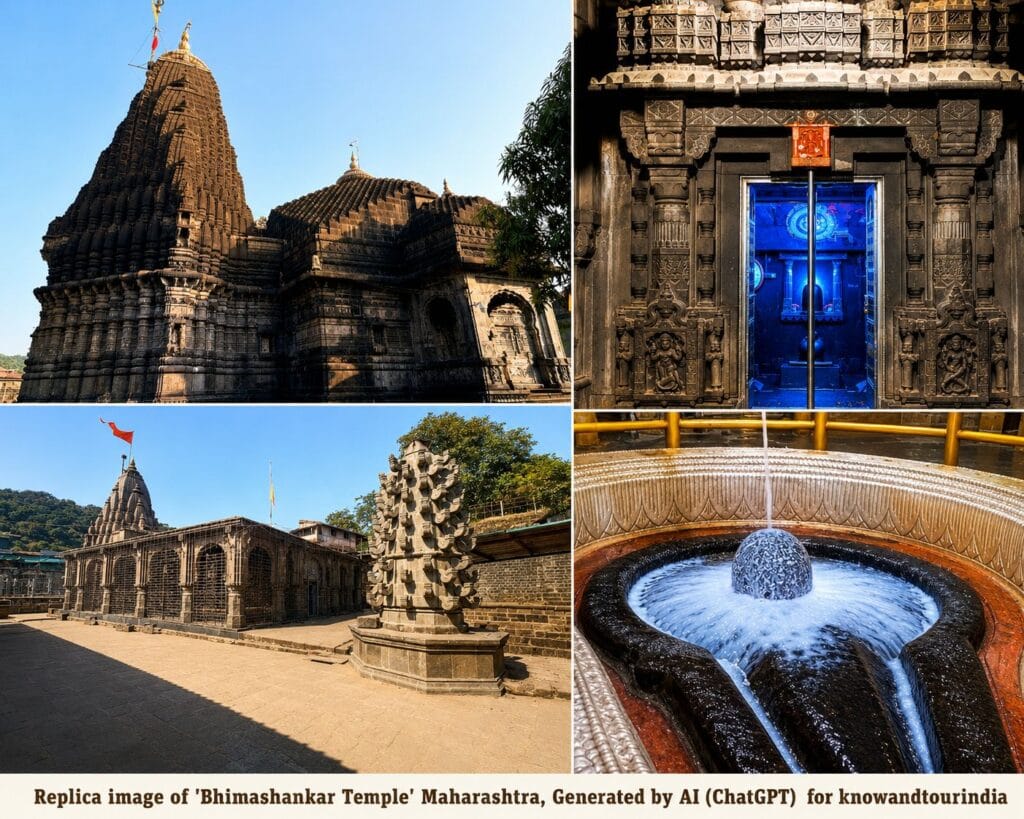
    The Bhimashankar Temple, one of the twelve “Jyotirlingas ” of Lord Shiva, is located on  hills of Sahyadri Range at about 100 km from Pune in Maharashtra state of India. The Bhima River, one of largest tributaries of Krishna River, also originates from this place and visit to this temple is a trekker’s paradise due to its beautiful location with surroundings of Buddha style monuments of Amba-Ambika. As per myth associated to Ramayana time this Jyotirlinga is related to Kumbhakarna’s son Bhima, who get immense power after performed penance to please Lord Brahma. After that Bhima started creating destruction in the world and defeated Kamrupeshwar a devotee of Lord Shiva. This irritated the Devtas(Gods) who requested Lord Shiva to visit  Earth and put an end to this domination  and ultimate war between Lord Shiva and demon put the demon (Bhima) to ashes. Thereafter Devtas( Gods) requested Lord Shiva to make that place his abode and Lord Shiva manifested himself here as Bhimashankar Jyotirlinga. It is believed that the Bhima River came in existence from the sweat poured from Shiva’s body in this the battle. 

    Trimbakeshwar Temple, Nashik, Maharashtra :

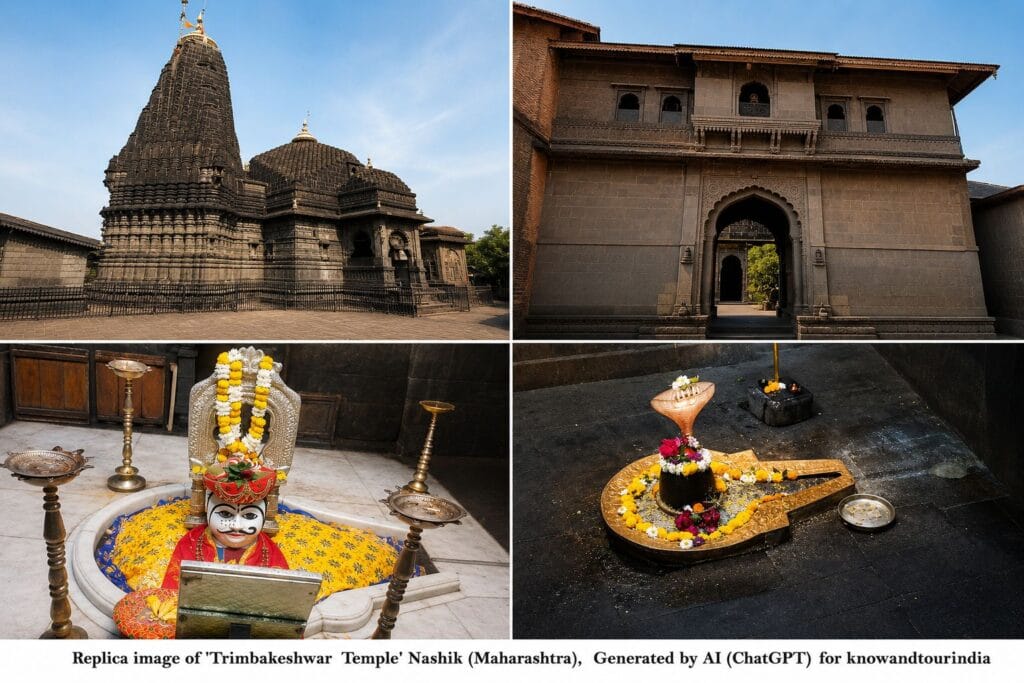
    The Trimbakeshwar Temple, one of the twelve “Jyotirlingas ” of Lord Shiva, is located on the banks of river Godavari in Nashik in Maharashtra state of India where holy “Kumbha Mela (fare)” is organized  every 12 years. The premises of temple have a holy kunda (sacred pond) named Kusavarta filled with water of the Godavari River also known as “Gautami Ganga” the most sacred river in South India. As per the Shiva Purana lord Shiva decided to reside here as Trimbakeshwar on the  request of River Godavari, Gautam Rishi and all the other Devtas(Gods). As per myth Gautam Rishi get a well from which never-ending supply of grains and food can be obtained. This well was obtained as gift from God Varuna which created jealous among other other Gods and they send a cow to enter the granary. The said cow was killed by Gautam Rishi by mistake and due to this Gautam Rishi asked Lord Shiva to do something to purify the premises.Then on the request of Lord Shiva holy Ganga flow through the premises to make it pure. It is believed that the Lord Shiva along with Ganda resided in the form of Trimbakeshwar Jyotirlinga on request of all so it is also believed that this Jyotirlinga fulfils everyone’s desires.

    Ghrishneshwar Temple, Aurangabad, Maharashtra:

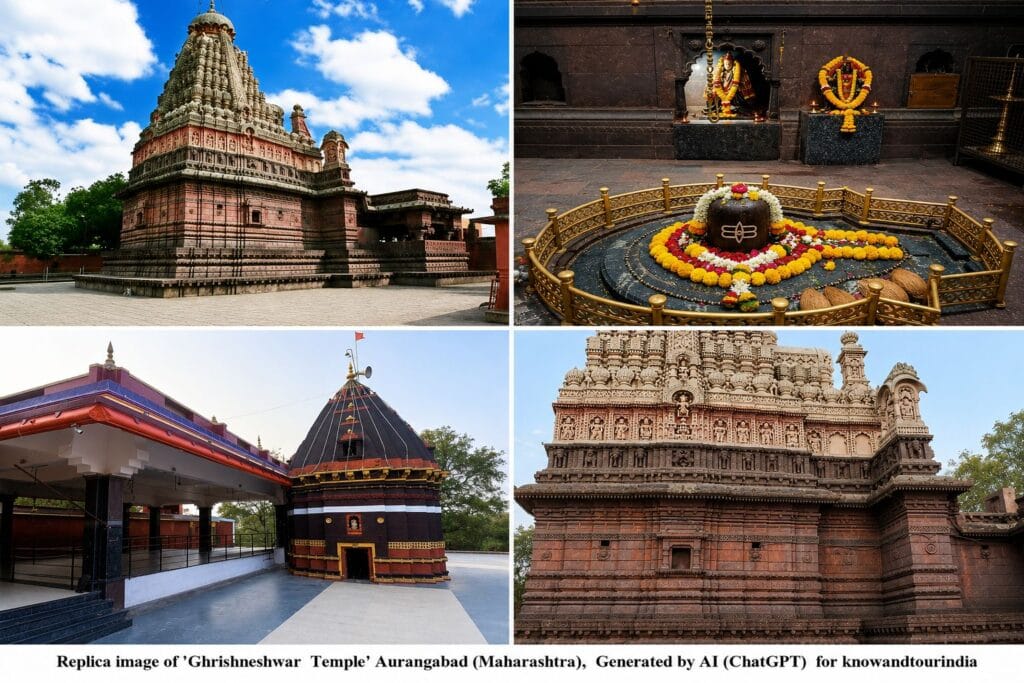
    The Ghrishneshwar Temple, one of the twelve “Jyotirlingas ” of Lord Shiva, is located  at about 20 km from Daulatabad near Ajanta and Ellora caves  in Maharashtra state of India. As per myth an extremely devout woman named Kusuma was living here who used to immerse Shiva’s lingam in a tank daily as her daily prayer. The second wife of his husband killed her son due to jealousy but depressed Kusuma  continued worshipped Lord Shiva and when she dipped  the lingan into the tank her son  became alive miraculously and Lord Shiva appeared before Kusuma and the villagers. Thereafter on the request of Kusuma Lord Shiva manifested himself here as Ghrishneshwar Jyotirlinga. This temple is also known by other names as Kusumeswarar, Ghushmeswara, Grushmeswara and Grishneswara. The temple was destroyed by Mughals during conflicts with Marathas  and was  rebuilt in the 18th century by queen Ahilyabai Holkar of Indore who also rebuilt the Kashi Vishwanath Temple in Varanasi after the fall of the Mughal empire.

    • Blogs (Click on it to see other blogs)