Tag: Mallikarjuna Temple

  • Top Tourist Attractions and Pilgrimage Places in Karnataka.

    Karnataka is a southern state of India. The geographical situation and glorious past has blessed this state with all types of tourist locations like beaches, hill stations, trekking facilities, forts & places, pilgrimage centers, wildlife sanctuaries, famous parks, museums, industries, modern educational centers etc.

    Tourist destinations/attraction in Karnataka state are:

    Forts, Palaces and monuments :

    • Mysore Palace (also known as Amba Vilas palace located in Mysore belongs to wadiyar dynasty of Mysore Empire),
    • Bangalore Palace (center of attraction for tourists in Banglaore built in the year 1878)
    • Tipu Sultan’s Summer Palace (located in Bangalore was residence of Musore ruler Tipu Sultan is an Indo-Islamic architecture)
    • Gulbarg Fort (Located in Kalaburagi and initially constructed by Raja Gulchand and later on enlarged in the year 1347 during Bahmani dynasty),
    • Raichur Fort (ancient fort on hilltop in Riachur city),
    • Mirjan Fort (Located on coast line in uttara Kannada district)
    • Bidar fort (Located in old Bidar city constructed during Bahmani dynasty),
    • Chitradurga Fort(It is a hidden gem in about 1500 acres in Chitradurga District built by Chalukyas between 11th to 13th century),
    • Gajendragad Fort(a massive fort built by famous Maratha ruler Chatrapati Shivaji Maharaj located on hilltop in Gadag district),
    • Bellary Fort( Located on hilltop in Ballari city),
    • Malkheda Fort (ancient fort located in Manyakheta town in Kalaburagi district also called Manyakheta Fort),
    • Kavaledurga Fort(a hidden gem in Western Ghats of Shivamogga district),
    • Nagara Fort(Located in Nagara village in the Shivamogga district has historic importance),
    • Basavakalyana Fort(Located in Bidar district has historic importance, also known as Kalyana fort),
    • Kittur Fort (Located in Kittur town in Belagavi district and connected with Rani Chennamma, a brave ruler, is major historical monument),
    • Manjarabad Fort(a large star shaped fort on hilltop, at a height of about 985 meters above sea level, constructed by Tipu Sultan is a heritage site at about 5 kms from Sakaleshpur, a hill station,  in Hassan district).
    • Hampi (a UNESCO Word Heritage Site, is the  jewel of the glorious Vijayanagara Empire where visiting temples, streets and its bazzars is a wonderful experience of feeling the old past time) etc.

    Beaches :

                         There are about 40 beaches on about 320 Kms coastline of Karnataka, which are located in its three coastal districts i.e. Uttara Kannada, Udupi and Dakshina Kannada.  The beaches in Karnataka state are quiet and calm to enjoy a quiet day, so these are different than those in Goa.

    Beaches in Uttara (North) Kannada district are:

    • Om beach (located in Hindu pilgrimage destination town Gokarna city is most famous beach with water sports facilities),
    • Kudle Beach(one of many beaches in Hindu pilgrimage destination town Gokarna in Uttara Kannada district near famous Om breach),
    • Gokarna Beach (about 10 Kms long beach in Hindu pilgrimage destination town Gokarna),
    • Paradise Beach (another beach in Hindu pilgrimage destination town Gokarna also called ‘Full Moon Beach’),
    • Half Moon Beach (a small beach in Gokarna town adjacent the Om Beach),
    • Devbagh beach (Located in Karwar town where nature lover tourist can enjoy untouched beauty of surrounding mountains of Western Ghats & adventure sports),
    • Tagore Beach (a beach of shining golden sand located on serene coastline of Karwar town, administrative headquarter of Uttara Kannada district, where a famous event called Karavali festival is organized every year in December-January),
    • Majali Beach (a peaceful beach of  scenic beauty in Karwar town just few kilometres from South Goa with many resorts to experience a private beach, also a place for bird watching and fishing),
    • Koodi bagh Beach (Located at the delta of Kali river in near Karwar town),
    • Murudeshwar Beach (Located in Murudeshwar town famous for its Murudeshwar Temple and 2nd tallest Lord Shiva statue of word where tourist can enjoy the beauty of mountains of Western Ghats & coconut trees),
    • Bhatkal Beach (Located in Bhatkal town an old town of historical significance near Murudeshwar town famous for its Murudeshwar Temple & other beaches around it),
    • Alvekodi Beach (an immaculate crystal clear white sand beach in Alvekodi village near Kumta town is an ideal picnic spot),
    • Baada Beach (a beautiful & clean beach in hills near Kumta town on trek route from Kirki to Gokarna),
    • Kasarkod Beach (a famous beach of about 5 Kms length in Kasarkod village near Honavar town).

    Beaches in Udupi district are:

    • Malpe Beach (a beautiful beach at 6 Kms from Udupi city situated on the delta of Udyavara River),
    • Kodi Beach (It is located on the delta of Suvarna River in Kodi Bengre village at about 18km from  Udupi city & Manipal University and is surrounded by water on three sides),
    • Trasi Maravanthe beach (Located in Maravanthe village of Udupi district),
    • Kaup Beach (Located between Mangalore and Udupi cities from where panoramic view of the sea can be experienced from the top of lighthouse),
    • Maravanthe Beach(a very beautiful beach at 12 Kms from Kundapur city),
    • Ottinene (Scenic beach & backwater located at about 40 kms north to Kundapur coastal town),
    • Uppinakudru (It is a small beautiful island village also known as Salt Island near Kundapura town, once served as the center of salt trading, also houses  many famous temples and Mutts),
    • Padubidri beach(a beach having water sports activity located in a small town named Padubidri where Dakkebali ritual held once in two years).

    Beaches in Dakshina (South) Kannada district are:

    • Panambur Beach (Located at about 13 km from Mangalore city it is a wholly owned by a private enterprise and is one of the safest and well-maintained beaches, hence have massive footfall),
    • Tannirbhavi breach (another popular beach located in Manglore city),
    • Surathkal beach(Located at about 13 km from Mangalore city, a charming lighthouse is addition in its beauty),
    • Ullal Beach (This beach located in Ullal town at about 12 Kms from Mangalore city, district head quarters of Dakshina Kannada district,  is a prime tourist attraction having facilities of water activities),
    • Someshwara Breach (This beach located in Someshwara village near Manglore cuity also houses the famous Someshwara Temple dedicated to Lord Shiva and ‘Ottinene Hill’ is also adjacent to it) etc.

    Backwaters/Lakes:

    Famous Backwaters/Lakes :

    • Honnemaradu(back waters of Sharavathi river at about 30 Kms from Sagara town, famous for ‘ Golden Lake’, in Shimoga district in Sahyadri Mountain range),
    • Sigandur (it is a village bordered by the backwaters of Linganamakki Dam and famous for Choudeshwari Temple in  Shimoga district),
    • Navilathirtha or Navilthirtha(It is the backwaters of Malaprabha River near Saudatti town in Belgaum district),
    • Lakkavalli (This is a scenic town known for reservoir of Bhadra River in Western Ghats in Chikkamagaluru district),
    •  Manchanabele Backwater (a reservoir of Manchanabele Dam located at about 45 kms from Bangalore city and about 22 kms from Mysore city is a famous picnic spot),
    • Sharavathi Backwaters(a must visit wonderful picnic spot on Sharavathi river on Linganamakki Dam in Shimoga district) etc.

    Hill Stations, Waterfalls, trekking trails:

    The large area of Western Ghats hills located in Karnataka has blessed this state with   beautiful hill stations, waterfalls, trekking trails, flora & fauna and coffee plantations.

    Some famous hill stations are :

    • Chikmagalur (city is district headquarter),
    • Agumbe (located in Shivamogga district),
    • Madikeri (a town in Kodagu district), 
    • Kodachadri (located in Shivamogga district),
    • Nandi Hills (an ancient hill station in Chikkaballapur district),
    • Kogadu(city is district headquarter) etc.

    Some famous trekking trails are :

    • Narasimha Parvata (in Agumbe),  Kudremukh (a mountain range in Chikmagalur district),
    • Kumara Parvatha (also called Pushpagiri trek located in Pushpagiri Wildlife Sanctuary in Kodgu district),
    • Kanoor trek (located in Shivamogga district),
    • Kodachadri (also located in Shivamogga district),
    • Coorg Plantations (trekking though coffee plantation).

    Some famous waterfalls are ;

    • Jog Falls(on Sharavati river near Siddapura in Uttara Kannada district),
    • Hebbe Falls(must visit waterfall at about 2 km trek near Chikmanglur),
    • Shivanasamudra Falls (near Bangalore),
    • Abbey or Jessy Falls(near Coorg),
    • Kalhatti Falls(About 400 feet falling in front of Veerabhadreshwara Temple at Chandra Drona hills at 82 kms from Chikmanglur),
    • Sathodi Falls(near Dandeli also called mini Niagra),
    • Arasina Makki or Arisina Guni Falls(within Mookambika Wildlife Sanctuary at Kodachadri Hills),
    • Kudlu Theertha waterfalls (near Agumbe),
    • Burude/Dodmane waterfalls(near Kyadgi in Uttara Kannada district) etc.

    Museums :

    Some famous museums are:

    • Folklore Museum(located in the University of Mysore and having the collection of art & craft from all over Karnataka),
    • Government Museum (located in Bangalore having amazing collection of archaeological items),
    • HAL Heritage Center and Aerospace Museum (located in Bangalore having collection aircraft models),
    • Manipal Museum of Anatomy and Pathology (located in Manipal in Udupi district having large collection of specimens & samples related to anotmy),
    • Archeological Museum,Hampi (located at Kamalapura village in Vijaypura district dedicated to ruins of Hampi & Vijayanagara empires),
    • Visvesvaraya Industrial & Technological Museum (Located in Bangalore related to science and technology),
    • Jayachamarajendera Art Gallery (Located in Mysore as part of Jaganmohan Place),
    • Railway Museum (Located in Mysore illustrating the development of railway in India) .

    Pilgrimage centers :

    All famous religions have grown in this region and glorious past has given famous pilgrimage centers related to Hindus, Jain, Buddhists, Muslim, Christians, Sikhs etc. It is mind blowing fact that there are more than 34000 temples in Karnataka and large number of them are ancient temples which were built by the rulers of glorious dynasties of past as Hinduism is the oldest religion of this region.  

    Some famous temples are:

    • Virupaksha Temple(This temple dedicated to Lord Sri Virupaksha, a form of Lord Shiva, is the part of UNESCO Word Heritage Site  located in Hampi, an ancient village, in Vijayanagra district), 
    • Vitthala Temple(This temple dedicated to Lord Vishnu is the part of UNESCO Word Heritage Site  located in Hampi, an ancient village, in Vijayanagra district and is famous for Stone Chariot & Musical Pillars, it is a must liked structure  due to its excellent architecture & matchless craftsmanship),
    • Sri Kadri ManjunathaTemple (Located at hill top at 4 Kms from Mangalore railway station and dedicated to Lord Manjunathaswamy, built in 10th or 11th  century & Buddhism had been practiced here till 10th century),
    • Sri Marikamba Temple(a famous temple dedicated to Goddess Durga located in Sirsi town of Uttara Kannada district built in the year 1688),
    • Kukke Subramanya Temple(this pilgrim center said to be 5000 years old is located in Subramanya village  of  Dakshina Kannada district, here Subramanya is worshiped as lord of all serpents),
    • Chennakeshava Temple(It is 12th century temple located at Belur in Hassan district),
    • Hoysaleswara Temple(12th century temple dedicated to Lord Shiva at Halebidu town of Hassan district),
    • Murudeshwar Temple(a famous temple dedicated to Lord Shiva in Murdeshwar  town of Uttara Kannada district, Gopuram of temple is 237 feet tall, said to be  tallest in India, and this place also have a 123 feet tall idol ofLord Shiva said to be 2nd largest in world),
    • Udupi Shri Krishna Temple(most revered temple dedicated to Lord Krishna located in Udupi city a district head quarter),
    • Mahabaleshwar Temple(a dravidian architectural style temple of 4th century at Gokarna beach of Uttara Kannada district dedicated to Lord Shiva),
    • Chennakesava Temple(a 12th century temple dedicated to Lord Chennakeshava, a form of Lord Vishnu, at Somanathapura town in Mysore district),
    • Vidyashankara Temple (14th century temple dedicated to Guru Vidhyashankara is a wonderful monument located in Sringeri, a hill town, in Chikkamagaluru district),
    • Kotilingeshwara Temple (a famous temple having Asia’s largest Shiva Lingam locared in  Kolar city a district head quarter),
    • Mallikarjuna Temple(an ancient temple dedicated to Lord Shiva at Pattadakal town, a UNESCO World Heritage Site, having many Hindu and Jain temples in Bagalkot district),
    • Durga Gudi Temple (a rock-cut temple dedicated to Goddess Durga located at Aihole village, home of more than 125 unique temples,  in Bagalkot district),
    • Annapoorneshwari Temple (a exciting temple dedicated to Goddess Annapoorna, surrounded by dense forests and valleys of the Western Ghats, located in Horanadu town of Chikmagalur district) etc.

    Some famous Jain temples are:

    • Jain monuments in Shravanabelagola (106 Jain monuments in Shravanabelagola town of Hassan district, out of which  92 are located on Chandragiri Hill named after King Chandragupta Maurya as he visited this hill with his teacher in 300BC),
    • Kundadri Temple (dedicated to the 23rd Tirthankara, Parshvanatha located on Kundadri hill in Shimoga district is famous Jain monument believed to be about 2000 years old),
    • Navagraha Jain Temple(located in Hubli town of Dharwad district and dedicated to the 23rd Tirthankara, Parshvanatha with smaller sculptures of 8 other Tirthankaras, devotees believe that their worshiping can remove  graha dhoshas of nine planets),
    • Badami Cave Temples (a complex of four Jain, Hindu and Buddhist cave temples),
    • Chandranatha Temple (dedicated to the 8th Tirthankara, Chandraprabha located at Moodbidri town in Dakshina Kannada district). 
    • Chaturmukha Basadi Jain temple (16th century Jain temple in Karkala town of Udupi district),
    • Jain Basadi Complex, Halebidu (Located in Halebidu town of Hassan district),
    • Sri Humcha Padmavati Temple(dedicated to Ma Padmavati, the protective Goddess of the twenty-third Jain Tirthankara, located in Humcha village of Shimoga district),
    • Jain Narayana Temple(Located  in Pattadakal  town, a UNESCO World Heritage sites, of bagalkot district),
    • Gommateshwara Statue(a huge statue of Lord Bahubli built in 983 BC on Vindyagiri Hill in  Shravanbelagola town in Hassan district also called Gomateshwara Temple or Bahubali Temple where Mahamastakabhisheka , a festival, is  celebrated once in twelve years) etc.

    Famous Buddhist pilgrimage centers are :

    •   Namdroling Monastery (this monastery also called Golden temple is located in Bylakuppe town of Mysure district at 34 kms from Coorg).
    • Sri Kadri Manjunatha Temple (Located at hill top at 4 Kms from Mangalore railway station and dedicated to Lord Manjunathaswamy, built in 10th or 11th  century & Buddhism had been practiced here till 10th century)

    Some famous Mosques are:

    • Jama Masjid (also known as Jamiya Masjid or Jumma Masjid is located at Vijayapura also called Bijapur is a large mosque initiated in the year 1578 by Adil shah I after his victory against the Vijayanagara Empire ),
    • Ek Minar Mosque (built during the Bahmani rule with a Persian polish of architecture is located in Raichur city of district ),
    • Masjid Zeenath Baksh (located in Mangaluru, built by  Arab Muslim traders during 644 AD which portrays the life stories of Prophet Mohamed) etc.

    Some famous Churches are:

    • St. Mary’s Basilica(oldest church in  Bangalore is famous for its  solemn service and the beautiful decorations),
    • Infant Jesus Church(dedicated to Infant Jesus and located at Bangalore, it is claimed that many miracles have happened here),
    • Sacred Heart Church(Located in Banglore, its Christmas Carol is very popular),
    • Holy Trinity Church (a must visit Church in Banglore at MG road, built in 1851 in English Renaissance style of architecture),
    • St. Philomena’s Church(Beautiful & large church in the Neo-Gothic architectural style located in Mysore is a must visit destination),
    • Antony’s Shrine(Located in Mysore known for miraculous powers),
    • St. Bartholomew’s Church(It is oldest church in Mysore),
    • Infant Jesus Cathedral(a church of Syro-Malabar Community located in Mysore),
    • CSI Wesley Cathedral(built by Wesleyan Missionaries Society & located in Mysore),
    • Milagres Church or the Church of Our Lady of Miracles(a beautiful church buit in 1680 in Manglore),

    Famous Gurudwaras are:

    • Gurudwara Nanak Jhira (This Gurudwara dedicated to 1st Sikh Guru Nanak Dev ji is located in the Bidar city, the district head quarter. The Jhira means a spring of water, it is believed that on hearing the trouble of locals during his visit, Guru Nanak Dev ji rolled a stone by his foot and a spring of clean water started flowing here which serves the Bidar till now from about 500 years) .
    • Gurudwara Guru Nanak Prachar Sabha(Located at Hospet town in Bellary district).

    Wildlife sanctuaries :

    The geographical situation and Western Ghats hills have blessed the Karnataka state with enormous flora & fauna due to which there are number of national parks & wildlife sanctuaries, some famous are:

    • Bhadra Wildlife Sanctuary (Located near Bhadravati town in Chikkamangaluru district is a tiger reserve having facilities of trekking, jeep safari, boat safari, bird watching etc),
    • Bandipur National Park ( Located in Chamarajanagar district),
    • Nagarhole or Rajiv Gandhi National Park (located in the Kogadu district),
    • Anshi National Park (Located in Uttara Kannada district),
    • Mudumalai National Park (Located in Nilgiri district),
    • Bannerghatta National Park (Located near Bangalore),
    • Bhimgad Wildlife Sanctuary (Located in Belgaum district),
    • Dandeli Wildlife Sanctuary (located in Uttara Kannada district & borders with Goa),
    • Daroji Sloth Bear Sanctuary (near World Heritage site of Hampi),
    •  Sharavathi Valley Wildlife Sanctuary (Located in Shimoga District),
    • Jayamangali Blackbuck Reserve (Located in Tumkur district),
    • Kali Tiger Reserve (Located in the Uttar Kannada district),
    • Pushpagiri Wildlife Sanctuary (located in the Kogadu district),
    • Talakaveri wildlife sanctuary (Located in the Kogadu district),
    • Ranganathittu Sanctuary (a bird sanctuary located in Mandya district),
    • Someshwara Wildlife Sanctuary (Located in Udupi & Shivamogga districts) etc.

    Airports:

    There are two international and seven domestic airports in Karnataka as under:

    Kempegowda International Airport(Located in Devanhalli town near Bengaluru also called Banglore),

    Mangalore International Airport(Located in Mangalore, coastal city),

    Mysuru Airportalso known asMandakalli Airport(Domestic airport located near village Mandakalli at about 10 kms from Mysore city),

    Kuvempu Airport also known as Shivamogga Airport (Domestic airport located at about 9 kms from Shivamogga city & at about 8 kms from Bhadravathi city),

    Bidar Airport (Domestic airport located in Bidar on Air Force station),

    Belgaum Airport (Domestic airport located in Belgaum),

    Kalaburagi Airport (Domestic airport located at about 12 kms from Kalaburagi city),

    Hubli Airport (Domestic airport located in Gandhi Nagar at about 8 kms from Hubballi city & at about 20 kms from Dharwad city),

    Some other small airports are Baldota Koppal Aerodrome (Koppal), Jindal Vijaynagar Airport (Vidyanagar), Hassan Airport (Hassan), HAL Airport (Bangalore) etc.

    Map of Karnataka

    • Blogs (Click on it to see other blogs)

  • 12 Jyotirlingas in India, You must visit once in life:

    According to Hindu mythology Brahma, Vishnu, and Mahesh (Shiva), collectively known as Trimurti or Tridev are the three main Hindu Gods, believed to be self-manifested, who control the universe’s creation, sustenance, and destruction respectively. Hence Brahma is the creator, Vishnu is the administrator and Mahesh is the destroyer as per Hindu mythology. As per a myth Lord Vishnu and Lord Brahma were debating that who is supreme. Lord Shiva (Mahesh) appeared as a column of light and asked them to find it’s both ends. Brahma moved to know the upper end and Vishnu moved to know the lower end of this column of light which later on known as Jyotirlinga. After a long time both appeared in front of Shiva and Vishnu accepted his failure to find the end but Brahma tell lie that he found the end of that light. This angered Lord Shiva because both were unsuccessful and due to which Lord Shiva cursed Brahma that he will not be worshipped by anyone despite he is the creator of the Universe. It is believed that the jyotirlingas are existing at the places where these columns of light fell. As per Shiva Purana there such 64 jyotirlinga shrines in India out of which 12 are the most sacred as believed to be ‘Swayambhu’, means they were created themselves without human involvement, though different myths are also associated with each of these Jyotirlingas. The temples of these Jyotirlingas are considered very auspicious as the supreme powers of Shiva by devotees.

    These Twelve Jyotirlingas are :

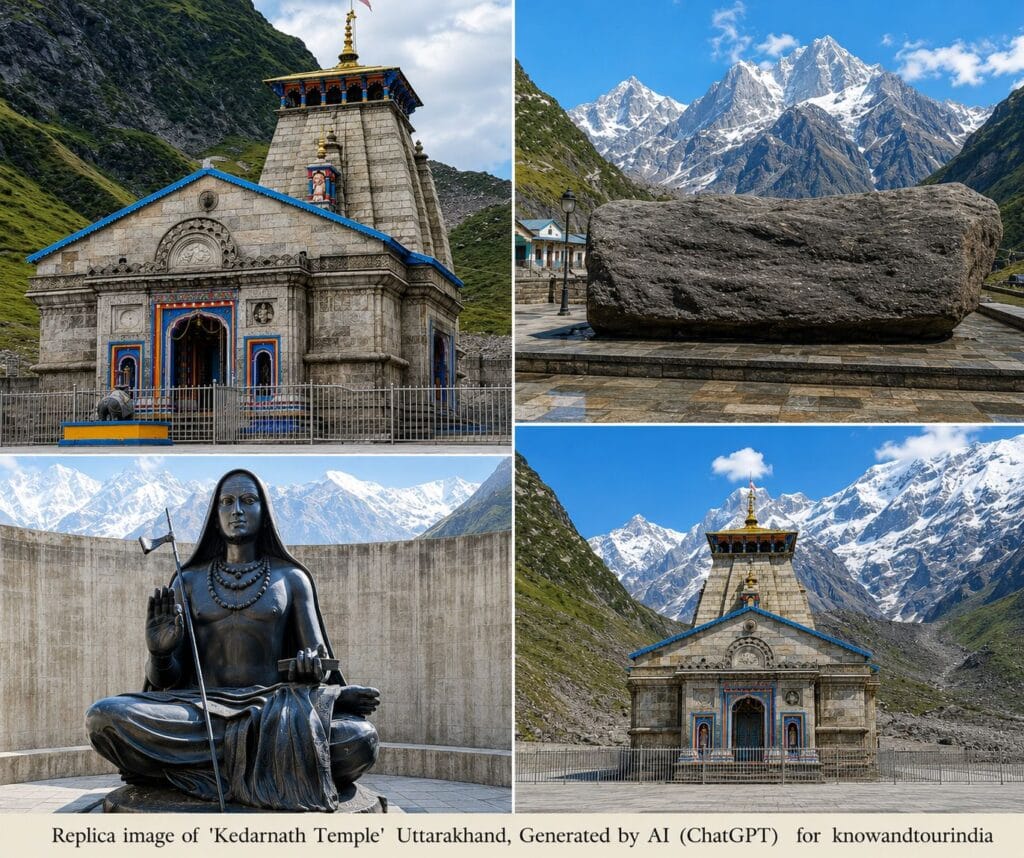
    Kedarnath Temple, Uttarakhand:

    Kedarnath temple, one of the twelve “Jyotirlingas” of Lord Shiva, located at an altitude of 3,580 meters near Chorabari glacier, the source of the Mandakini river is the most revered temple of Hindus and is a part of Char Dham pilgrimage circuit. This temple located in Rudraprayag district of Uttarakhand, India is about 150 miles from Hardwar. This temple having an aura of peace and purity around is considered to be more than a thousand years old.  It is said that by visiting this temple the unholy become holy and the holy becomes holier.  It is believed that praying at this temple fulfills the all desire of devotees. As per tradition of pilgrimage to Kedarnath devotees first collects holy water from Yamunotri and Gangotri to offer at Kedarnath. When the Kedarnath temple remains closed in winters, the worship of God Kedarnath ji is done at Ukhimath.

    It is a myth that considered that after the great battle of Kurukshetra, the Pandavas felt guilty of having killed their own kith and kin, so they needed the blessing of Lord Shiva for their redemption. But Lord Shiva was not willing and so eluded the Pandavas repeatedly and took refuge at Kedarnath in the form of a Bull and dived into the ground due to followed by Pandavas, leaving his hump on the surface.

     The remaining portions of Lord Shiva reappeared at other four places, the locks with the head at Kalpeshwar, the face at Rudranath, the arms at Tungnath and the stomach(nabhi) at Madmaheshwar, so they are worshipped there as signs of Lord Shiva.
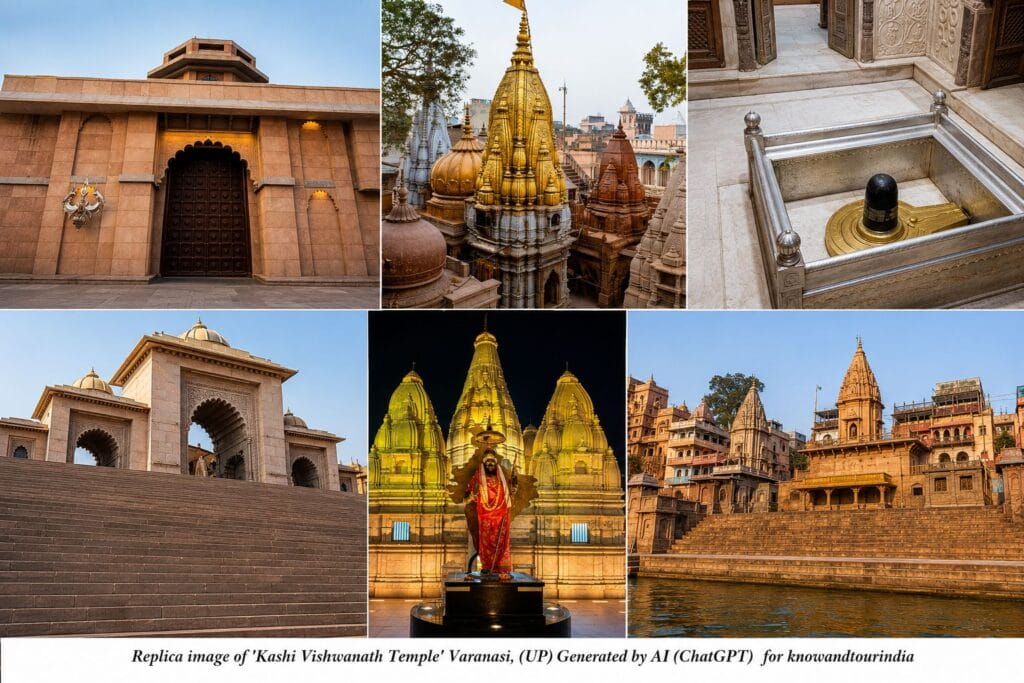
    Vishwanath Temple, Varanasi, Uttar Pradesh :

    Vishwanath Temple, one of the twelve “Jyotirlingas” of Lord Shiva, located in the crowded area of holy city Banaras (Varanasi) on the bank of holy river Ganga in Uttar Pardesh state of India. It is believed that this site is where the first Jyotirlinga proved its supremacy over other gods as vishwanath means the ruler of universe. As per Hindu myth the person who dies here achieve liberation and it is believed that Shiva himself resided here. The city Varanasi is also known by other names i.e. Banaras and/or Kashi. As per myth Lord Brahma performed severe penance here due to which Lord Shiva and Goddess Parvati visited him. Lord Brahma sang hymns to praise Lord Shiva but by mistake he mispronounced one of the hymns.  This angered Lord Shiva and he severed Brahma’s head but it (Brahma’s head) was stuck on Shiva’s back which was falloff only when Shiva went to Varanasi.
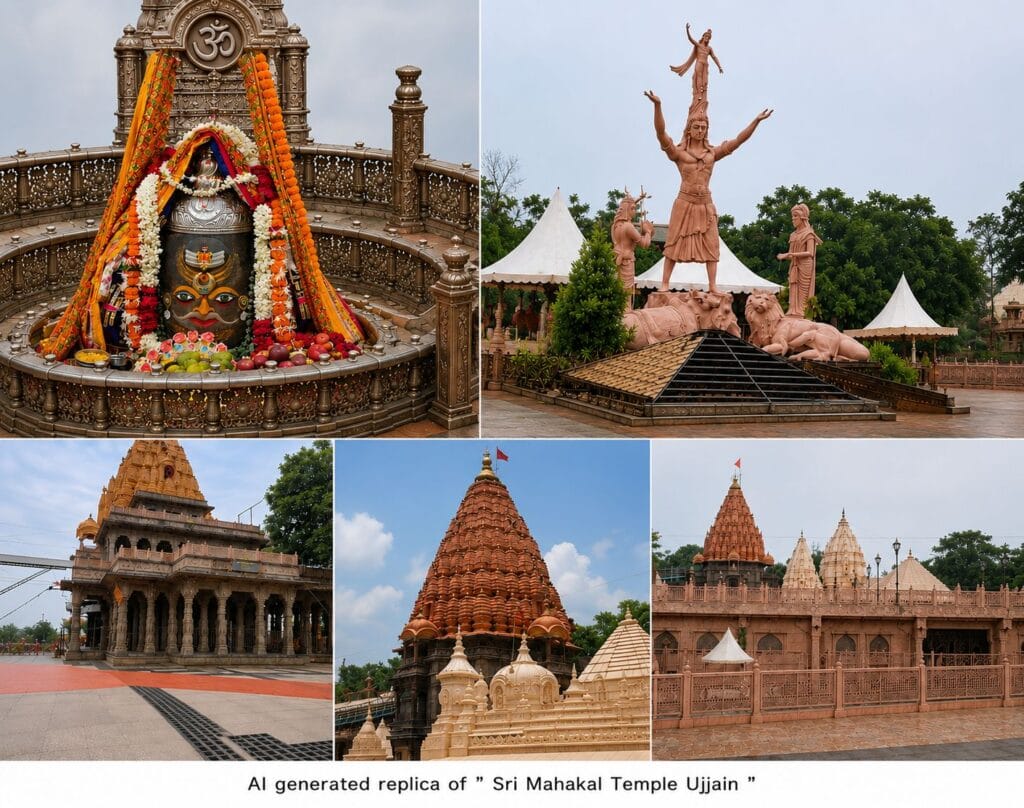
    Mahakaleswar Temple, Ujjain, Madhya Pradesh:

    Mahakaleshwar Temple, one of the twelve “Jyotirlingas” of Lord Shiva, is located in Ujjain city on the banks of the river Kshipra in Madhya Pradesh state of India. This lingam on the banks of Rudra Sagar lake is consider to be Swayambhu and believed that it derives powers from Shakti within. The temple complex houses more than hundred small shrines and remains crowded mostly. This only south facing lingam known as “Mahakala” is one among the seven “Mukti-Sthal”, the place that can liberate a human.

    Following myths are associated with Mahakaleshwar (Mahakala) Temple:

    1.    A Shiva devotee King Chandrasena was the ruler of Ujjain  and due to his devotion Lord Shiva appeared in his Mahakal form to defeat his enemies. Lord Shiva agreed to reside in Ujjain to take care of the city after conquered the enemies of King Chandrasena.

    2.   A rakshasa (demons) named Dushana threatened the four Brahmanas to kill, if they will not their practice of reading Vedas. When these Brahmanas were attacked by the demons they pray to Shiva. Lord Shiva appeared and killed  Dushana and his soldiers, hence Lord Shiva is known as Mahakala.       
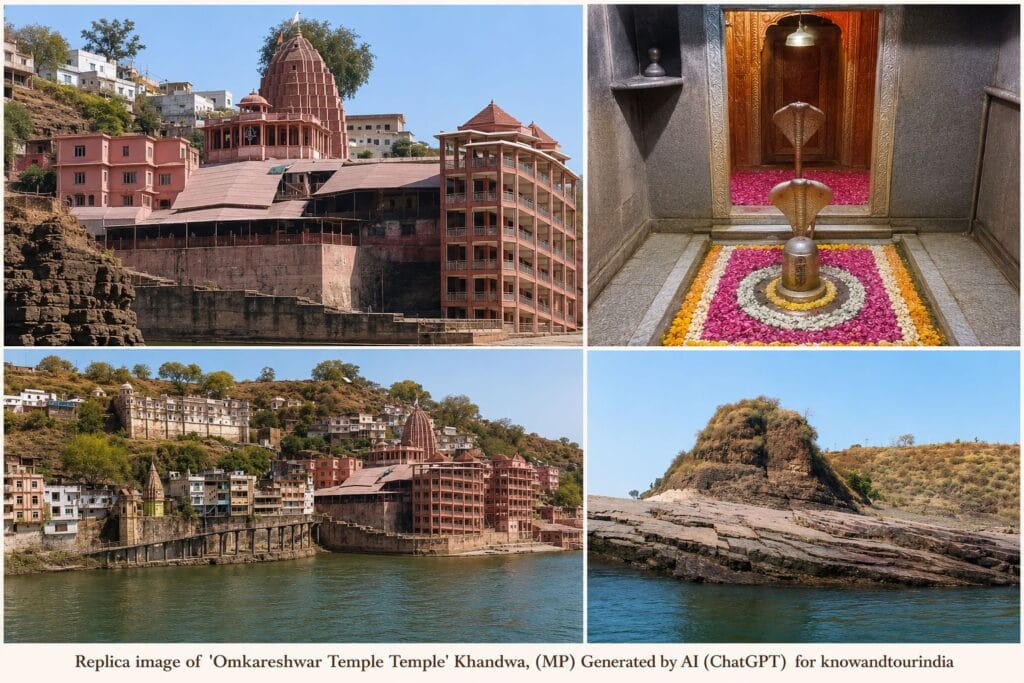
    Omkareshwar Temple, Khandwa, Madhya Pradesh:

    The Omkareshwar Temple, one of the twelve “Jyotirlingas” of Lord Shiva, is located at Khandwa in Madhya Pradesh on an island called Shivapuri in the Narmada River. The shape of the lingam in this temple is like ‘Om and Omkareshwar means “Lord of Omkara (Sound of Om)”.

    Following myths are associated with Omkareshwar Temple:

    1. As per a Hindu myth, once upon a time, when Devtas(Gods) were defeated by Danavas (Demons) Lord Shiva emerged in the form of Omkareshwar Jyotirlinga and defeated the Danavas (Demons) on the pray of Devtas (Gods) hence this temple is considered as highly sacred by the Hindus.
    2. As per Shiva Purana, when Narada visited the Vindhyas mountains he claimed that Mount Sumeru mountain is superior than the Vindhyas due to Lord Shiva present there always despite Vindhyas is the highest peak. Due to this Vindhyas prayed and Lord Shiva appeared before the Vindhya mountains causing the Omkareshwar temple existence.
    Somnath Temple, Veraval, Gujarat:

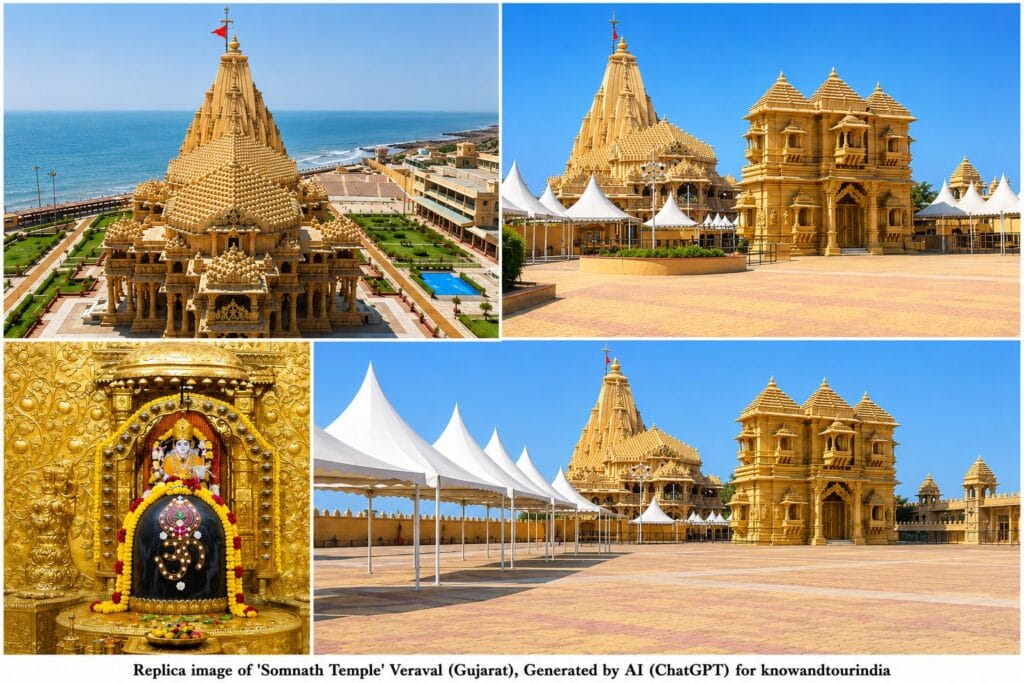
    The Somnath Temple, one of the twelve “Jyotirlingas ” and  one of the highly venerated Shiva shrines is located at Veraval in Gujarat state of India. As per myth the moon was married to 27 daughters of Daksha Prajapati representing the 27 Nakhshatras but moon loved his wife Rohini the most out of his 27 wives. Due to this indifference Daksha Prajapati cursed moon that it would lose all its radiance. The disappointed moon visited this place with his wife Rohini and worshipped the Sparsh Lingam to get rid of the curse. Lord Shiva pleased with his devotion blessed him to regain his lost beauty and shine and thereafter on the request of moon Lord Shiva assumed the name Somchandra and resided here eternally, so the place is known as Somnath. This Somnath temple was built around the 9th century CE and was destroyed by Muslim invaders from time to time and Mahmud Ghazni had plundered the temple in the 11th century. So this temple has been rebuilt many times in history and after independence of India this temple was reconstructed by demolishing the ruins on the orders of Vallabhbhai Patel, the first Home Minister of India, but can be completed after his death. The Maru-Gurjara architecture also called Chaulukya or Solanki style of this temple makes it a picturesque pilgrimage spot. This temple is an important Hindu pilgrimage place and must visit tourist site.
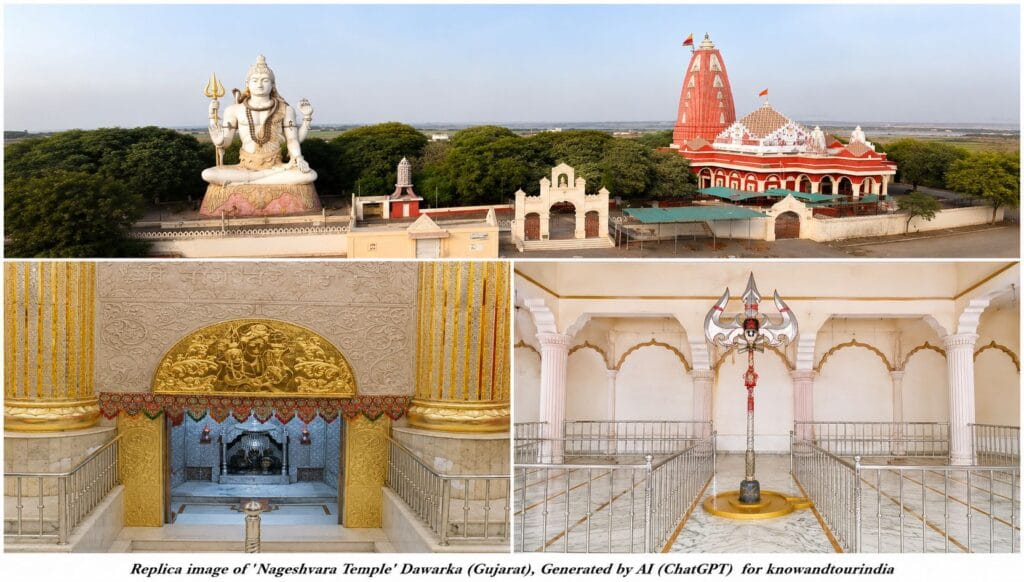
    Nageshvara Temple,  Dwarka, Gujarat:

    The Nageshwar Temple,, finds its mention in Shiva Purana as one of the twelve “Jyotirlingas ” of Lord Shiva  is located near Dwarka on the coast of Saurashtra in Gujarat state of India. It is believed that worship at this temple denotes protection from all types of poison and devotees who worship at this temple become free of all poisons.  As per myth this ocean was ruled by the demon Daruka and he (demon Daruka) used to imprison and kill those who traversed through the sea. The said demon also do same with Supriya, a Shiva devotee, who started chanting “Om Namah Shivaya” and Lord Shiva gave him (Supriya) a divine weapon called “Pashupata” to kill the demon and his army. Hence Nageshwar Shivling was established as Nageshwar means king of nags (snakes).
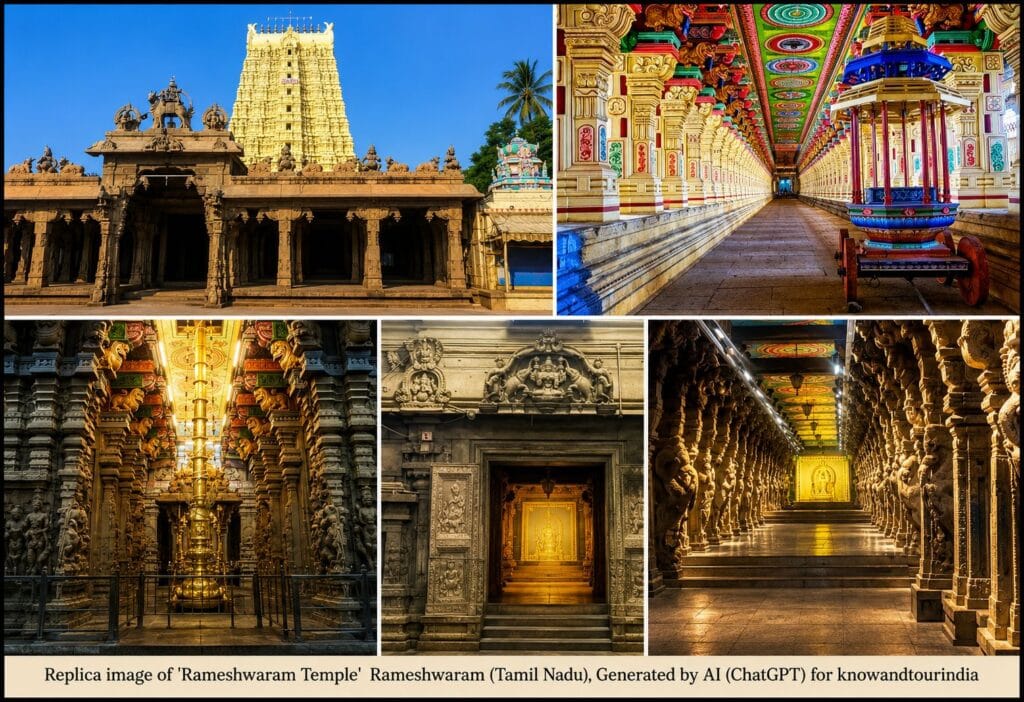
    Rameshwaram Temple, Rameshwaram, Tamil Nadu:

    The Rameshwaram Temple, one of the twelve “Jyotirlingas ” of Lord Shiva  is located  on seashore in the Rameshwaram island of Tamil Nadu state of India near Ram Shetu. This southernmost “Jyotirlingas”  temple is associated with Ramayana and Lord Ram’s victorious return from Sri Lanka. It is believed that when Lord Ram stopped at here on his way to Sri Lanka and was about to drinking water on this seashore a celestial edict was heard by him that ‘you are drinking water without worshipping me’. On hearing it Lord Ram made a Shiv-linga of sand and worshipped it. The Lord Shiva and Goddess Parvati appeared and blessed him to defeat Ravana.  The Lord Shiva on request of Lord Rama resided here as a Jyotirlinga.
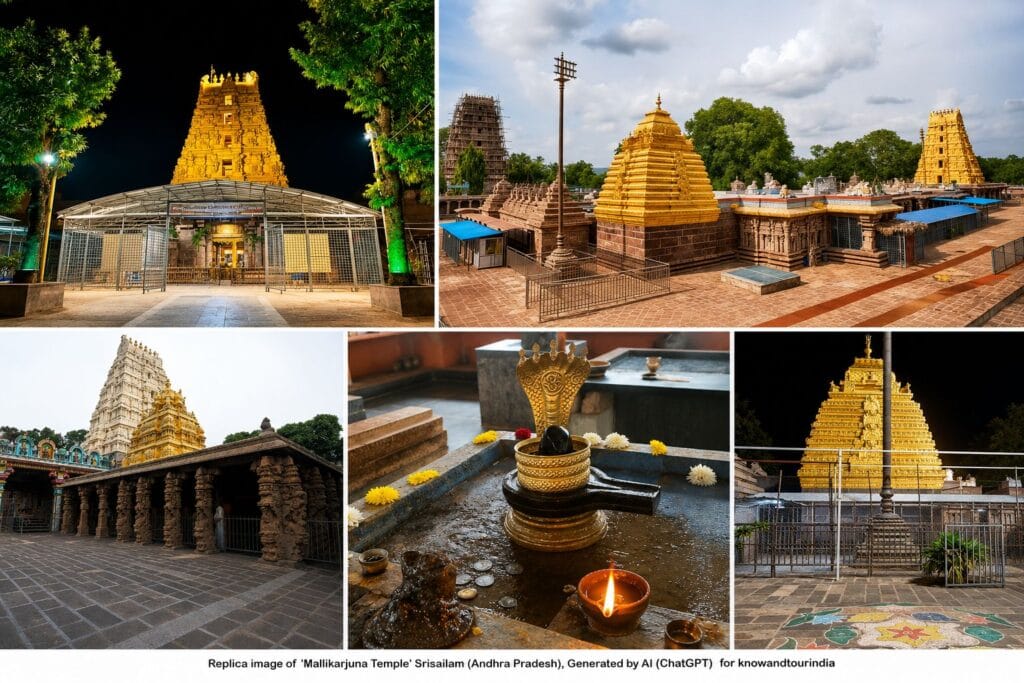
    Mallikarjuna Temple, Srisailam, Andhra Pradesh:

    The Mallikarjuna Temple, one of the twelve “Jyotirlingas ” of Lord Shiva  is located  at the banks of the Krishna River on the Shri Shaila Mountain (Srisailam) in Andhra Pradesh state of India.  This temple, one of the greatest Shaivite shrines in India, is also known as “Kailash of the South” being presiding deities at this temple are Mallikarjuna (Shiva) and Bhramaramba (Devi) and this large fort like temple as known as ‘Sri Bhramaramba Mallikarjuna Temple’.

    As per this myth in Shiva Purana Lord Shiva and Goddess Parvati arranged a competition among their both sons, Kartikeya and Ganesha to decide who should get married first. As per this task who will complete the round the word first will be winner so on hearing it Kartikeya started his journey by sitting on his peacock but  Lord Ganesha went in circles around his parents considering that they are the world for him. It is believed that taking the circumvent of  parents is equivalent to taking the circumvent of  the world. This pleased the Lord Shiva and Godess Parvati  and they  married Ganesha to Siddhi (spiritual powers) aprosperity). As per other myth  Buddhi (the intellect)  is also believed to be the wife of Ganesha.

    The angered Kartikeya, the elder son of Lord Shiva, decided to remain unmarried  and left his home due to decision of marriage of his younger brother Ganesha before him and came to Kraunch Mountain. All Gods of Hindu mythology came here  to console Kartikeya but remain unsuccessful then Shiva-Parvati themselves came but they were also turned away by Kartikeya.  Lord Shiva and Goddess Parvati were very hurt due to this state of Kartikeya and decided to resided on the mountain as Jyotirlinga  by the name of Mallikarujna (Mallika means Parvati&  while Arjuna means Shiva). It is believed that the person on seeing the tip of this mountain gets liberated from all sins and becomes free from the ferocious cycle of life and death. 
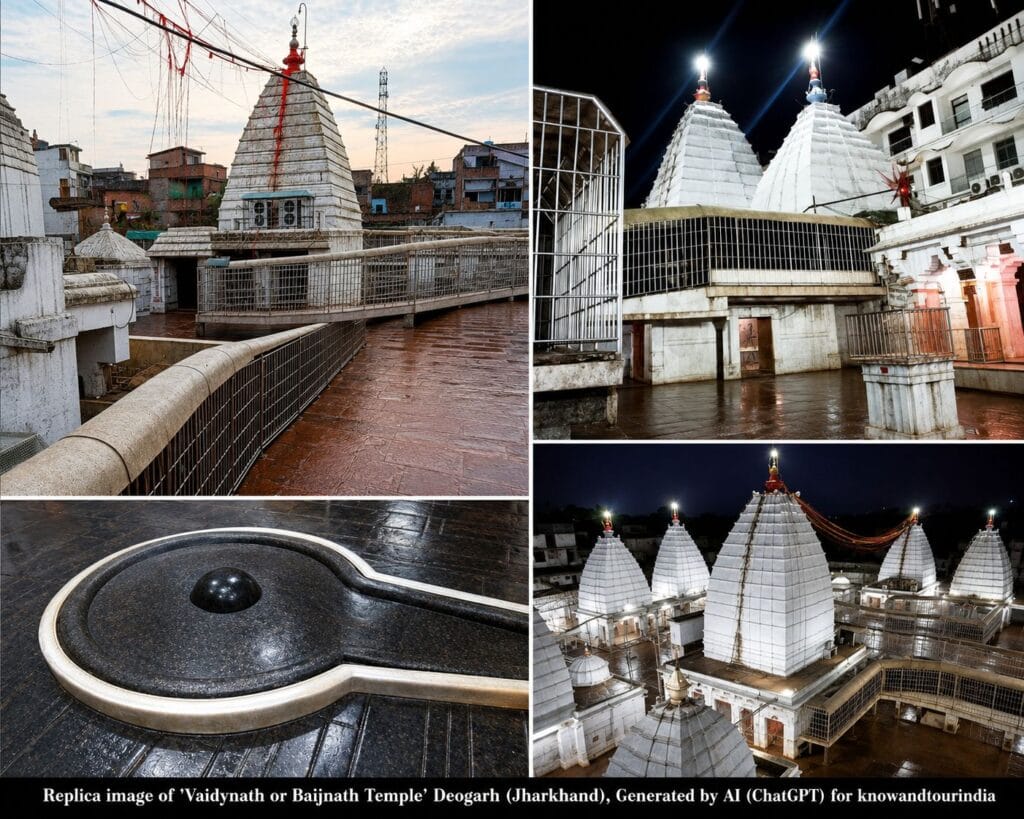
    Vaidyanath or Baijnath Temple, Deogarh, Jharkhand:

    The Vaidyanath Temple also known as Baijnath or Vaijnath, one of the twelve “Jyotirlingas” of Lord Shiva is located at Deogarh in the Santal Parganas region of Jharkhand state of India. It is believed that the sincere worship at this temple relieves the devotee from all his worries &miseries and he attains moksha or salvation. As per Hindu myth the Ravana, demon king of Lanka, prayed to Lord Shiva to make him invincible and  offered his ten heads as sacrifice.  The pleased Lord Shiva appeared and cured the injured Ravana which made Lord Shiva equivalent to a vaidya (doctor) so known as Vaidyanath. Ravana requested lord Shiva to reside in Lanka, on this request Lord Shiva said as a condition that if  the linga  was placed down anywhere that place will be  the site of the linga. When Ravana was carrying the linga to Lanka, the feared Gods send Lord Varuna (the Lord of the waters) to interrupt his wanting to relieve himself.   Ravana descended and handed the linga to a Brahmin believed to be Lord Vishnu. When Ravana came back after get relieved himself he found that the linga was placed on the ground and he got realized being tricked.  In this way this Jyotirlinga was get established here. There is also a disputed about actual Vaidyanath jyotirlinga amoung the three Lord Shiva’s famous temples as Vaidyanath in Deogarh, Jharkhand, Baijnath in Himachal Pradesh and Parli Vaijnath in Maharashtra.
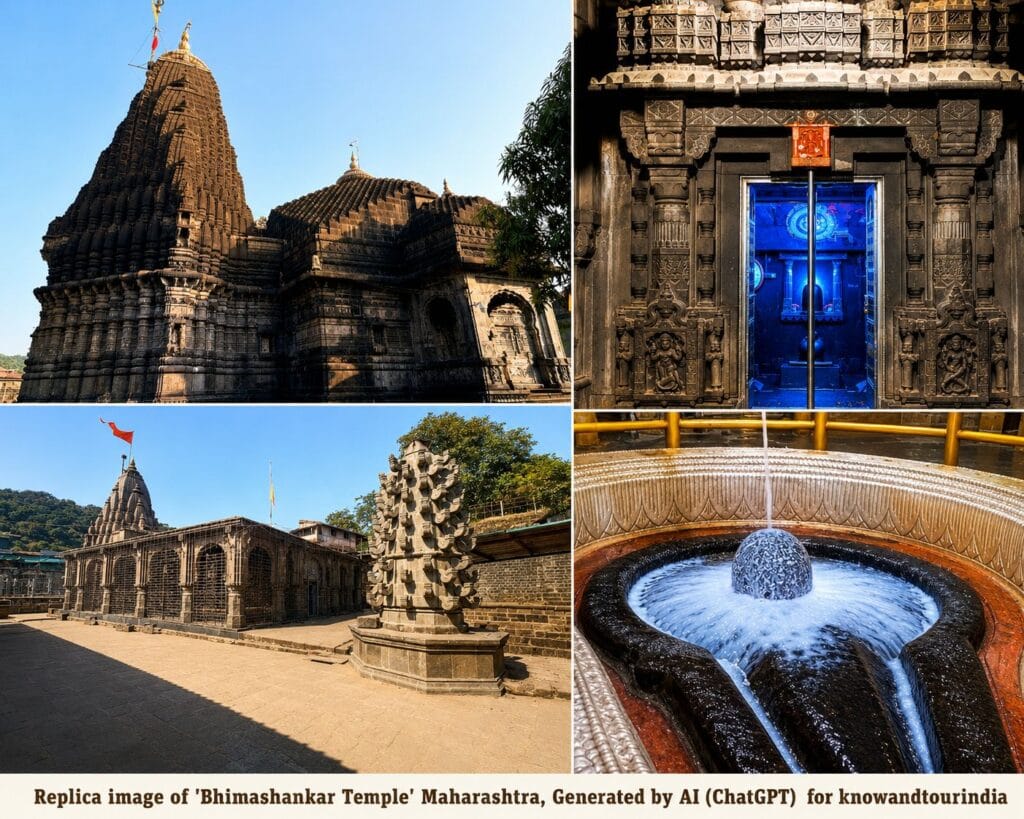
    Bhimashankar Temple, Maharashtra:

    The Bhimashankar Temple, one of the twelve “Jyotirlingas ” of Lord Shiva, is located on  hills of Sahyadri Range at about 100 km from Pune in Maharashtra state of India. The Bhima River, one of largest tributaries of Krishna River, also originates from this place and visit to this temple is a trekker’s paradise due to its beautiful location with surroundings of Buddha style monuments of Amba-Ambika. As per myth associated to Ramayana time this Jyotirlinga is related to Kumbhakarna’s son Bhima, who get immense power after performed penance to please Lord Brahma. After that Bhima started creating destruction in the world and defeated Kamrupeshwar a devotee of Lord Shiva. This irritated the Devtas(Gods) who requested Lord Shiva to visit  Earth and put an end to this domination  and ultimate war between Lord Shiva and demon put the demon (Bhima) to ashes. Thereafter Devtas( Gods) requested Lord Shiva to make that place his abode and Lord Shiva manifested himself here as Bhimashankar Jyotirlinga. It is believed that the Bhima River came in existence from the sweat poured from Shiva’s body in this the battle. 
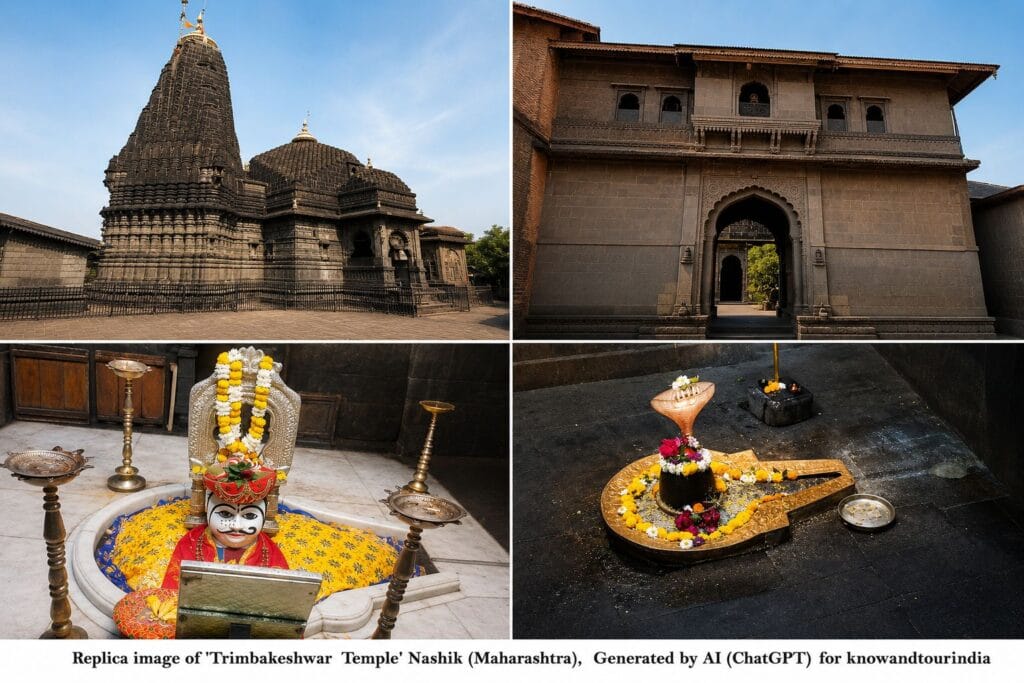
    Trimbakeshwar Temple, Nashik, Maharashtra :

    The Trimbakeshwar Temple, one of the twelve “Jyotirlingas ” of Lord Shiva, is located on the banks of river Godavari in Nashik in Maharashtra state of India where holy “Kumbha Mela (fare)” is organized  every 12 years. The premises of temple have a holy kunda (sacred pond) named Kusavarta filled with water of the Godavari River also known as “Gautami Ganga” the most sacred river in South India. As per the Shiva Purana lord Shiva decided to reside here as Trimbakeshwar on the  request of River Godavari, Gautam Rishi and all the other Devtas(Gods). As per myth Gautam Rishi get a well from which never-ending supply of grains and food can be obtained. This well was obtained as gift from God Varuna which created jealous among other other Gods and they send a cow to enter the granary. The said cow was killed by Gautam Rishi by mistake and due to this Gautam Rishi asked Lord Shiva to do something to purify the premises.Then on the request of Lord Shiva holy Ganga flow through the premises to make it pure. It is believed that the Lord Shiva along with Ganda resided in the form of Trimbakeshwar Jyotirlinga on request of all so it is also believed that this Jyotirlinga fulfils everyone’s desires.
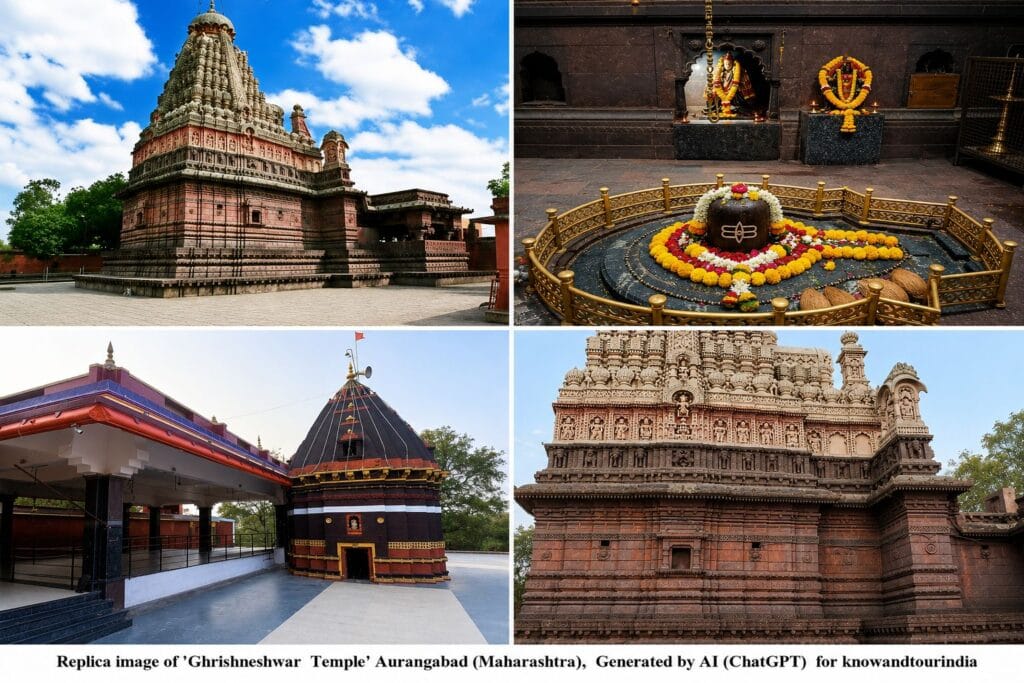
    Ghrishneshwar Temple, Aurangabad, Maharashtra:

    The Ghrishneshwar Temple, one of the twelve “Jyotirlingas ” of Lord Shiva, is located  at about 20 km from Daulatabad near Ajanta and Ellora caves  in Maharashtra state of India. As per myth an extremely devout woman named Kusuma was living here who used to immerse Shiva’s lingam in a tank daily as her daily prayer. The second wife of his husband killed her son due to jealousy but depressed Kusuma  continued worshipped Lord Shiva and when she dipped  the lingan into the tank her son  became alive miraculously and Lord Shiva appeared before Kusuma and the villagers. Thereafter on the request of Kusuma Lord Shiva manifested himself here as Ghrishneshwar Jyotirlinga. This temple is also known by other names as Kusumeswarar, Ghushmeswara, Grushmeswara and Grishneswara. The temple was destroyed by Mughals during conflicts with Marathas  and was  rebuilt in the 18th century by queen Ahilyabai Holkar of Indore who also rebuilt the Kashi Vishwanath Temple in Varanasi after the fall of the Mughal empire.
    • Blogs (Click on it to see other blogs)